Ask a Cuban musician what holds the music together and the answer is often one word: clave. It is a short rhythmic pattern, five strokes spread across two bars, and almost every Cuban style built on son or rumba is organised around it. The good news is that you can learn to hear it in an afternoon. The better news is that once you can, Havana's music opens up in a new way.
What the word means
Clave is Spanish for key, as in the key to a lock, and also for a code. It is also the name of the instrument that often plays the pattern: two short sticks of hard wood, called claves, struck together. One stick rests in a cupped hand, which acts like a little sound box, and the other strikes it. The result is a sharp, high click that cuts through a whole band.
Even when nobody is playing claves, the pattern is still there. Musicians feel it, and the other parts are written or improvised to fit around it. Playing against it, "crossed" as musicians say, sounds wrong to a trained ear in the same way a wrong note does.
Counting it out
Think of two bars, each with four beats. Count steadily: one, two, three, four, one, two, three, four. The son clave puts three strokes in the first bar and two in the second.
- First bar: a stroke on one, a stroke halfway between two and three, and a stroke on four.
- Second bar: a stroke on two and a stroke on three.
Say it out loud as "one... and-a... four / two, three", clap on those spots, and keep it going in a loop. The first bar feels pushed and uneven, the second feels settled. That tension and release is the whole point.
This order, three then two, is called three-two. Start the loop on the second bar instead and you get two-three. It is the same pattern, but which half a song starts on matters, because the melody and the other instruments line up with it. A singer phrasing in two-three over a band playing three-two would be a mess.
Son clave and rumba clave
There are two main versions. Son clave is the one above, the pattern under most son, salsa and dance music. Rumba clave is almost identical, but the third stroke of the three-side comes a little later, just after beat four instead of on it. That small delay makes rumba clave feel more restless and more urgent, which suits the drums and dancing of rumba.
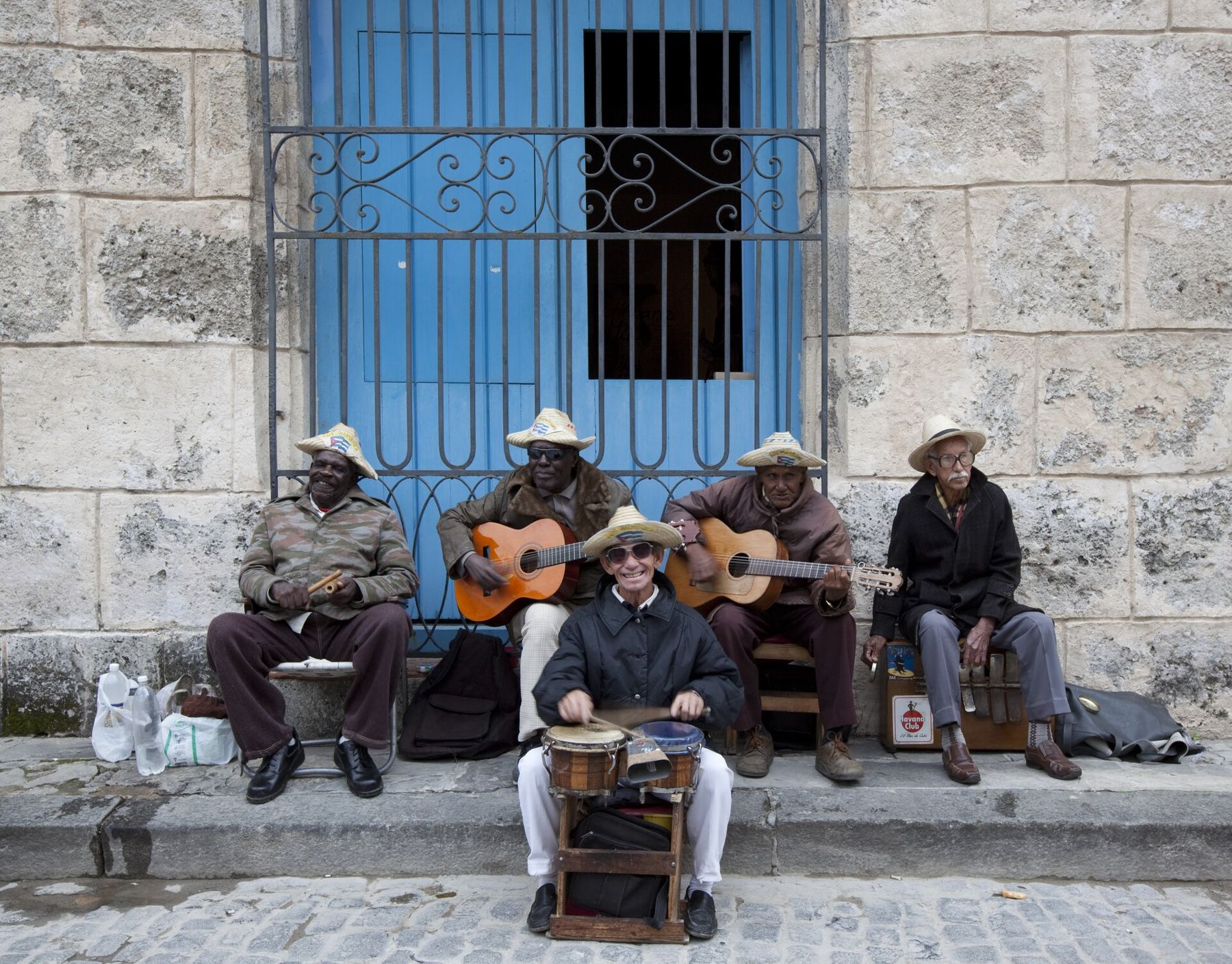
You can hear the difference live. In an old-town plaza, a son band will usually be on son clave; the story on son, the sound under everything covers the instruments around it. At a Sunday rumba session in the Callejón de Hamel, listen for the late third stroke, often played on claves or tapped on a wooden box.
 Flip it overBatá drums and the sacred rhythmsPhoto: Ivan2010, CC BY-SA 3.0
How to clap along without getting lost
Clapping clave with a band is the best practice there is, and nobody minds if you do it quietly.
- Find the beat first. Tap your foot to the steady pulse. Do not clap yet.
- Find the bass. In son, the bass often lands on the "and" of two and on four. If you can hear that, you are close to the clave.
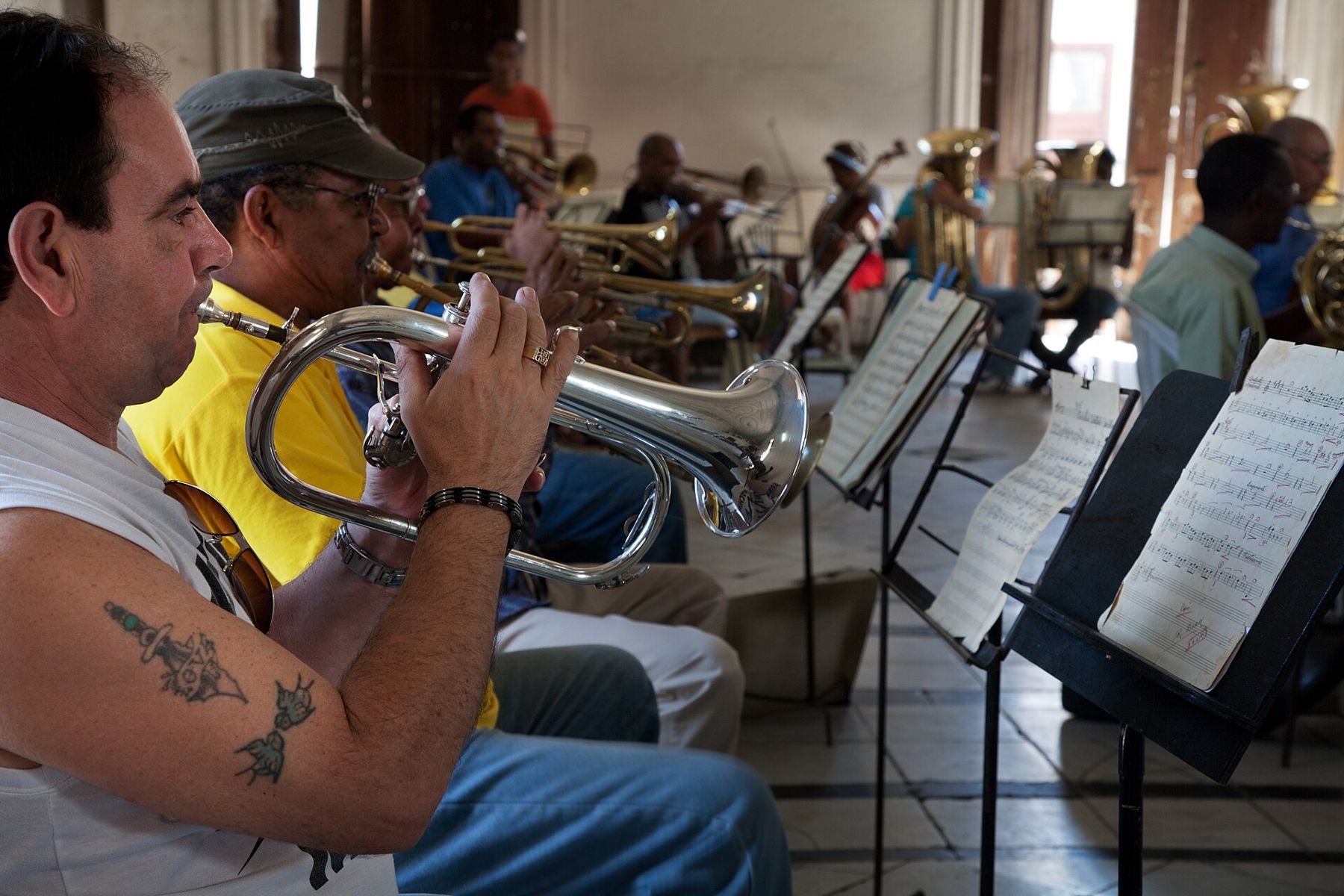
- Listen for the claves. If there is a player with sticks, watch their hands. Match them before you try alone.
- Clap the two-side first. The two even strokes are easier. Add the three-side once those feel solid.
- Stay out of the way. Clap softly, by your own body. Loud clapping off clave makes life hard for the band.
If you lose it, stop, find the beat again and come back in. Musicians do this all the time.
Clave in other music
Clave is not only Cuban. Versions of the same pattern turn up across African and Afro-Caribbean music, and it found its way into American rhythm and blues and early rock and roll. In Havana, though, it is everywhere: in the shared-taxi radio, in children's clapping games, in the shuffle of dancers in a dance hall. Modern Cuban dance bands bend and stretch it, but they rarely leave it behind. The history of the rumba side is told in the story on Matanzas, where rumba began.
Taking a dance class
A dance class is one of the quickest ways to feel clave in your body rather than count it. Havana has many teachers offering salsa, son and rumba lessons to visitors, from group classes to private lessons in a living room or a rooftop. A few general points:
- Ask your teacher to start with the basic step and how it sits against the clave. Good teachers often clap it while you dance.
- Cuban salsa, sometimes called casino, is danced in a circular, turning style rather than in a straight line. Expect a lot of spins.
- Prices, class lengths and booking arrangements vary widely; agree on them clearly in advance and check before you go.
- Wear shoes that let your feet turn on the floor. Rubber soles grip too hard.
Practice in ten minutes a day
Before your trip, put on any Cuban son or salsa recording and clap the pattern for ten minutes. Try both three-two and two-three and notice which one fits. Try rumba clave over a rumba recording. By the time you land, you will hear the click of the sticks in the first plaza you cross, and everything else in the band will start to make sense around it.