Matanzas lies on a deep bay on Cuba's north coast, around a hundred kilometres east of Havana. Many visitors pass straight through on the way to the beach resorts further along the coast. Stop, and you find a provincial capital with a strong sense of itself: a city of rivers and bridges, of nineteenth-century wealth from sugar, of poets and musicians, and above all of rumba.
The city of bridges
Two rivers, the Yumurí and the San Juan, run through Matanzas to the bay, dividing the centre into separate districts joined by a series of bridges. The bridges give the city its nickname, and walking across them is the simplest way to understand its shape. Stand on one and you hear the slow water underneath, the traffic overhead, and the port beyond.
In the nineteenth century, Matanzas grew rich on sugar and coffee and became a centre of literature and culture, which earned it another nickname, the "Athens of Cuba". Its centre still has broad squares and handsome public buildings from that era, some restored and some in need of repair.
On the main square, Plaza de la Libertad, an old pharmacy has been preserved as a museum, with its porcelain jars, wooden counters and laboratory left much as they were. Opening hours change; check before you go.
The Teatro Sauto
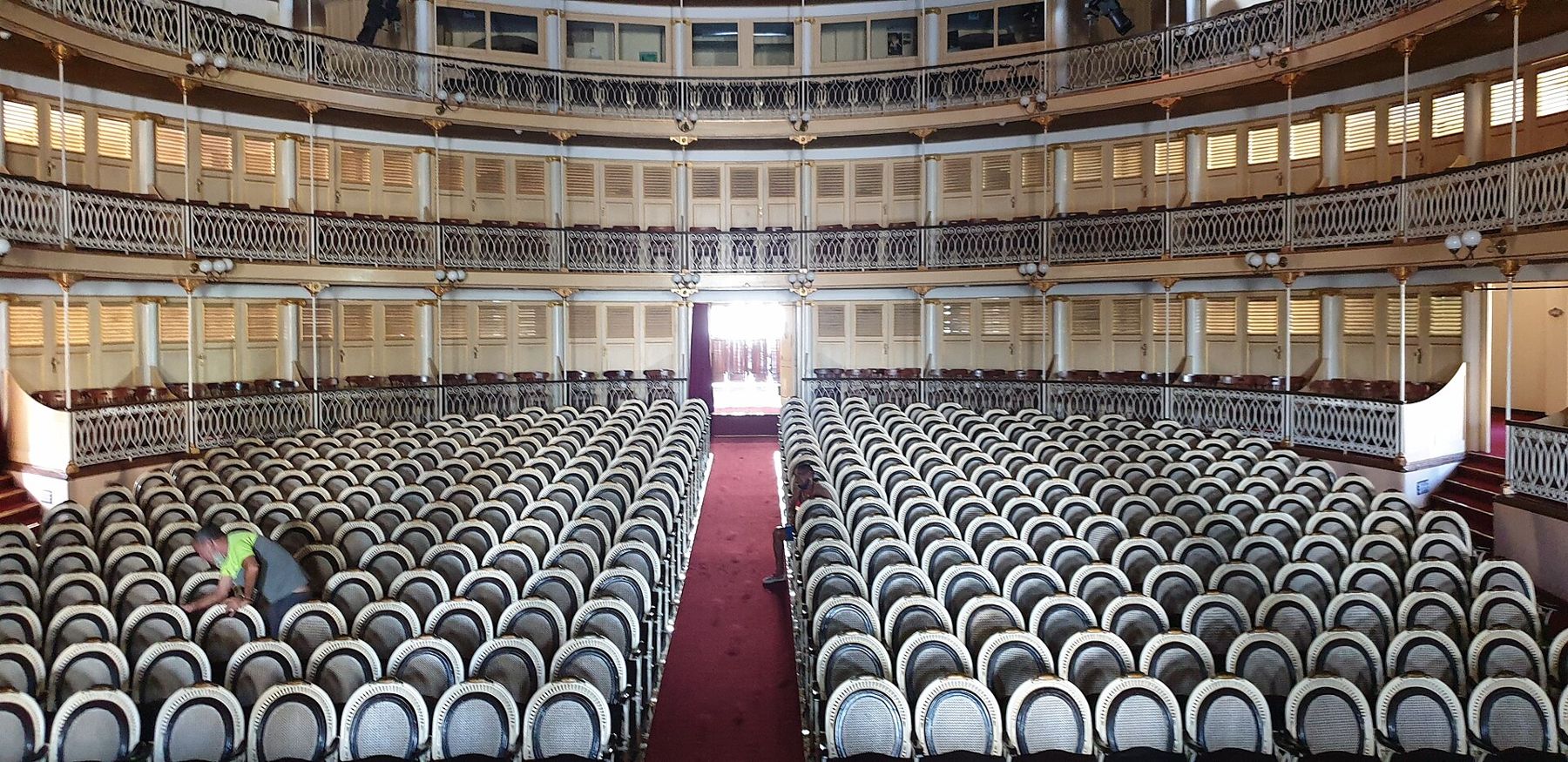
The city's showpiece is the Teatro Sauto, a neoclassical theatre that opened in the 1860s and is one of the finest of its period in Cuba. Inside, horseshoe-shaped tiers of balconies with slender iron columns rise above the stalls, and the painted ceiling and wooden boxes give the hall a warm, close acoustic.
The Sauto has hosted opera, drama, dance and concerts for well over a century and has been through long periods of restoration. Whether it is open, whether there is a performance or a guided visit, and at what time, varies; check before you go. If there is a concert or a dance performance during your visit, it is worth arranging your day around it.
Matanzas is also often credited as the birthplace of the danzón, an elegant nineteenth-century couple dance with a slow, stately rhythm that later fed into much of Cuban popular music. It is a reminder that the city's musical life runs well beyond the drums.
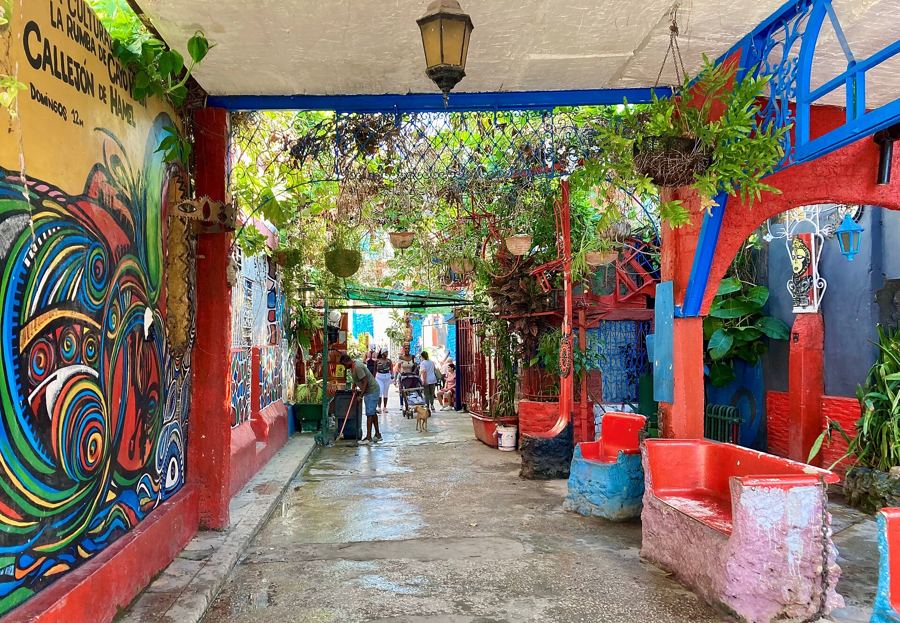 Flip it overRumba on a Sunday in the Callejón de HamelPhoto: Dudva, CC0
Where rumba began
Rumba is a family of Afro-Cuban music and dance built on voices, hand clapping and drums, which took shape in the nineteenth century among Black Cubans in the port neighbourhoods, plantations and shared courtyard houses of Matanzas and Havana. Both cities claim it, and both have good reason. What is clear is that Matanzas was one of its great centres, and that some of the most respected rumba groups in Cuba have come from here.
There are three main styles:
- Yambú, the slowest, a gentle couple dance often thought of as the oldest form.
- Guaguancó, the most widely heard, a faster couple dance with playful pursuit between the dancers.
- Columbia, fast and athletic, traditionally danced by a single man, a style with strong rural roots in the Matanzas countryside.
The core instruments are three drums of different pitches (in modern rumba usually congas), the clave (two hardwood sticks struck together), and often a catá or a stick on wood, under a lead singer and a chorus. The clave pattern is the backbone; the guide to clave explains how to hear it.
Rumba in Matanzas can be heard at cultural centres, festivals and community events. Schedules are informal and change often, so ask locally on the day. Rumba is closely related to, but separate from, the religious drumming of Regla de Ocha; ceremonies with batá drums are religious occasions and not performances, as the story on batá drums explains.
The Yumurí valley and the road there
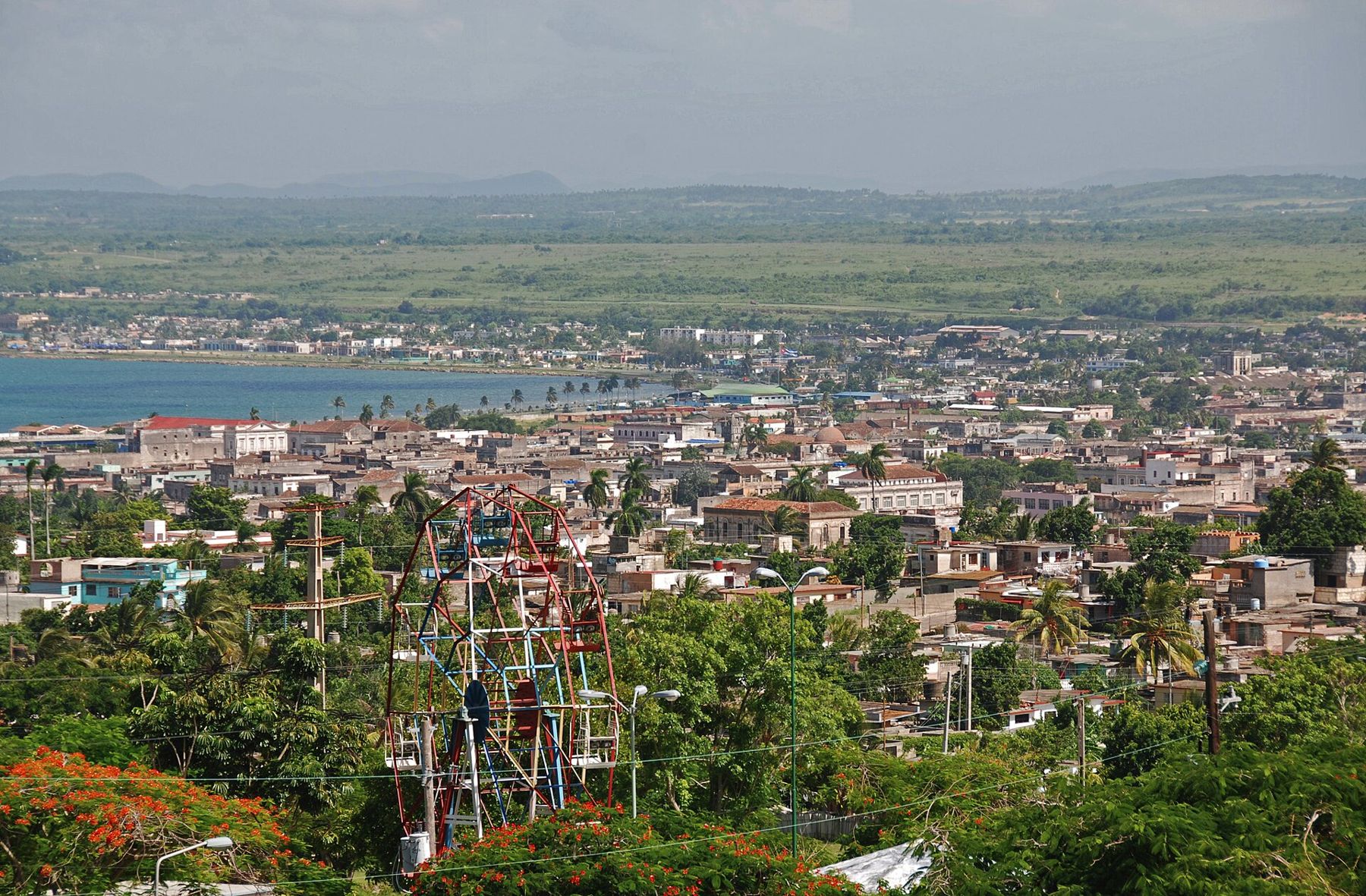
On a hill above the city, the hermitage of Monserrate looks out over the Yumurí valley, a deep green bowl of royal palms and farmland between hills. It is one of the classic Cuban views, and the walk up rewards you with wind and birdsong above the noise of the town.
The road from Havana to Matanzas, the Vía Blanca, follows the coast past oil wells and small towns and crosses the Bacunayagua bridge, a tall concrete span over a deep gorge, the highest bridge in Cuba. There is a lookout near it where many people stop.
Listening well
If you find rumba in Matanzas, the etiquette is simple. Stand where you do not block the dancers or the drummers. Clap only if the group invites it, and try to clap the clave rather than on every beat. Ask before photographing or filming anyone close up, and if there is a hat or a door charge, contribute. The singers often improvise verses about what is happening around them, so a newcomer standing too close to the drums may end up, gently, in the song.
Planning the day
- Getting there: by hired car with a driver, by long-distance bus, or by shared taxi. The trip takes around two hours each way depending on traffic and stops; check current options before you go.
- Time: leave early, so you have the morning for the bridges and museums and the afternoon free for music if it is on.
- Combine: some visitors pair Matanzas with the beaches further east; it is a long day, so keep it simple.
- Bring: water, sun protection and local cash; card payment cannot be relied on.
Back in Havana, Sunday's rumba in the Callejón de Hamel is the natural follow-up, and you will hear it differently after a day in Matanzas.