Getting around Havana is part of the experience of Havana. Transport in the city is a mix of old American cars working as shared taxis, modern and old buses, bicycle taxis, regular taxis and a great deal of walking. None of it follows a neat published system, and much of it works by listening, watching and asking. Fares and options change often, so treat what follows as a general picture and check before you go.
Walking first
The best way to experience the central districts is on foot. Habana Vieja is compact and largely closed to through traffic, and the walk from there through Centro Habana to Vedado, while long, follows the sea along the Malecón. Many of the old plazas are only a few minutes apart.
Walking in Havana is pleasant, but it takes some care. Pavements are often uneven or broken, kerbs are high, and drivers do not always give way to pedestrians. Midday heat is serious, so plan longer walks for the morning and late afternoon, carry water and look for the shaded side of the street.
Almendrones: the shared taxis
The old American cars from the 1940s and 1950s that you see everywhere are not only for photographs. Many work as almendrones or máquinas, shared taxis running along fixed routes on the main avenues, picking up and dropping off along the way. The story of the old cars explains why so many still run.
How they work, in general:
- Stand at the side of a main road where the cars pass, facing the direction you want to go.
- When a car approaches, raise your hand or point in your direction; drivers sometimes call out where they are going.
- If it stops, say your destination or the main street you want, briefly. If it is on the route, the driver nods and you get in; if not, he drives on.
- Pay when you get out, ideally with the exact amount in small local notes.
Fares are fixed by route and distance and are usually cheap for locals; ask someone what the normal fare is before you get in. They are a great way to hear the city: windows down, radio on, five strangers in a car.
City buses
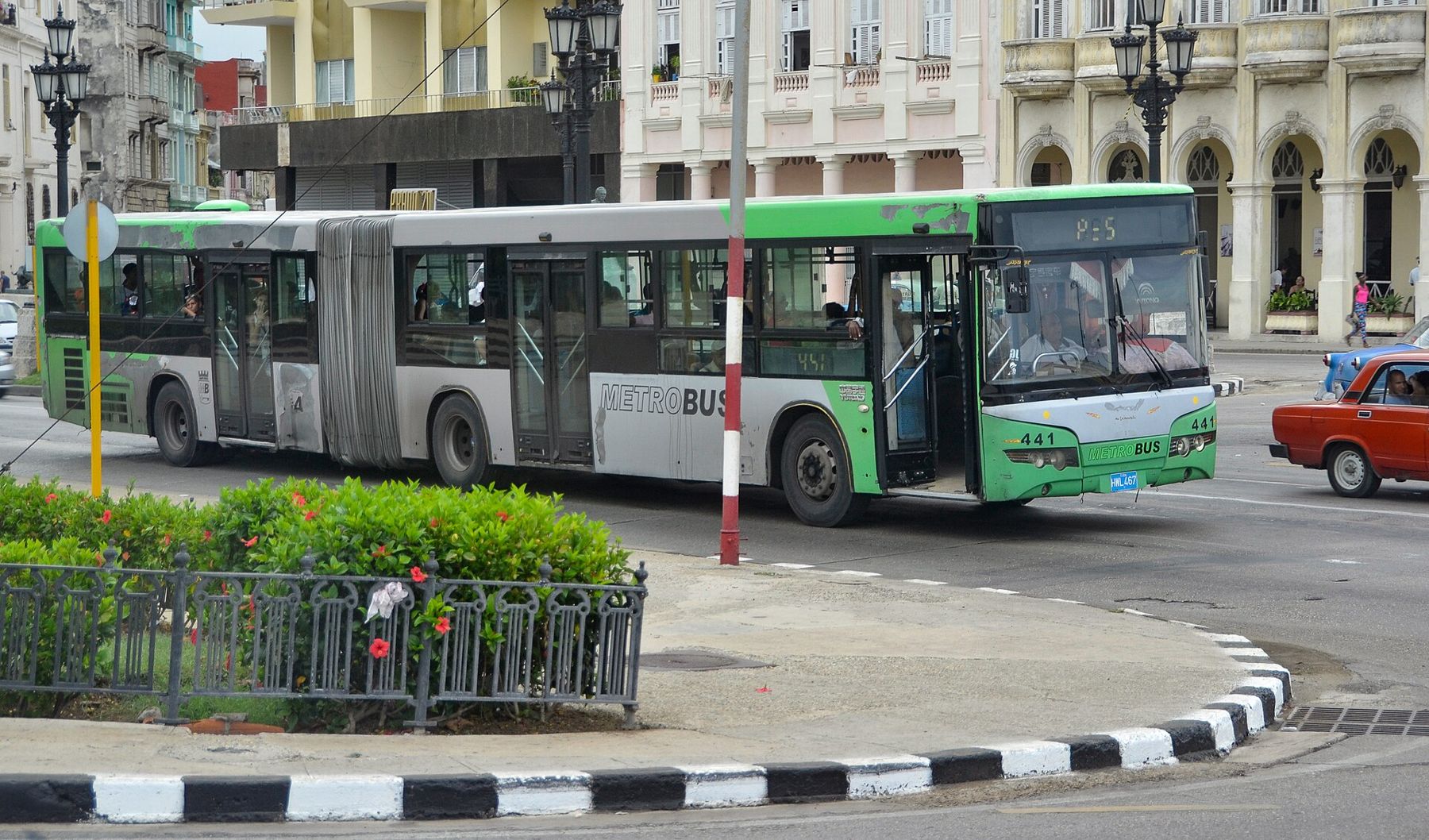
Havana's bus network covers the whole city, including routes that link the centre with Vedado, Miramar and outer districts. Main routes have been run with articulated buses, and route numbers have used letters and numbers. Buses are cheap but often crowded, with irregular waits; at busy times the crush can be intense.
If you try them, keep valuables secure, carry small change, and ask the people waiting at the stop which bus goes where; Cubans are generally helpful with directions. Shouting "¿el último?" ("who is last?") at a stop tells you whose turn in line comes before yours, a habit used for any queue in Cuba.
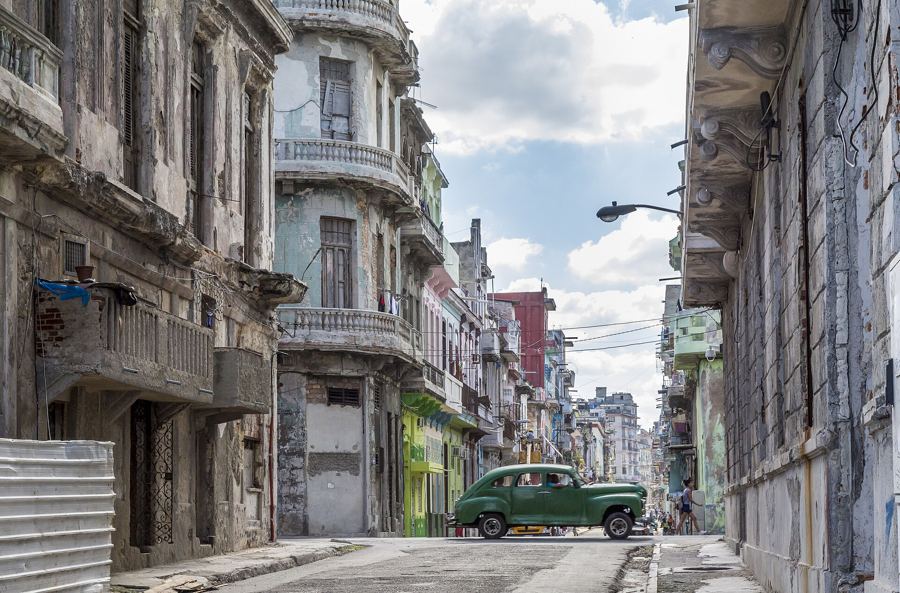 Flip it overCentro Habana, where the city talks out loudPhoto: Eva Blue evablue, CC0
Bicitaxis and cocotaxis
Bicitaxis, pedal-powered tricycle taxis with a covered seat for two behind the rider, work the narrow streets of Habana Vieja and Centro. They are a good choice for short trips where cars cannot easily go, and riding in one through the old streets brings you close to every sound around you. Agree the fare before you set off, and be clear whether it is per person or for the trip.
Cocotaxis are small yellow motorised three-wheelers with a rounded egg-shaped shell, mainly used by visitors for short trips. They are noisier and more exposed than they look.
Horse carts and the harbour ferries
In some outer districts and nearby towns, horse-drawn carts still work as shared transport on set routes, and in the old city horse carriages carry visitors on sightseeing loops. You will hear them before you see them: the clop of hooves on asphalt and the jingle of harness. Across the harbour, small passenger ferries link the old city with Regla and Casablanca, a short crossing covered in the harbour ferry story. They are cheap, used mainly by local people, and come with a bag check before boarding.
Regular taxis and private rides
Licensed taxis, from modern cars to older models, wait outside main hotels, at the airport and at some squares, and can be hailed in the street. Some have meters, many do not; agree the price before you set off. Private drivers with classic convertibles offer tours by the hour, especially near the Parque Central and in the old city; fares are set by negotiation.
Ride-hailing services based on phone apps have appeared in Havana in some forms, but they depend on internet access and their rules and availability change. The guide to money and getting online has general notes on connection.
Asking, listening and paying
- Know your destination: a street name and cross street ("23 y L") or a landmark works best. Write it down.
- Carry small notes: drivers often cannot change large bills.
- Agree fares first for anything without a fixed route or meter.
- Ask locals: the fare they pay is a good guide, though visitors are sometimes charged more; stay polite.
- Allow time: waits can be long, routes change, and fuel shortages have at times reduced transport sharply. Check before you go.
Above all, leave room in the day. A shared taxi that fills slowly, a bus that does not come, or a driver who takes the long way round is normal, not a disaster. Build your plans around a few fixed points, walk the rest, and treat the waiting time as part of listening to the city. For trips out of the city, to the eastern beaches or to Matanzas, the same options apply on a larger scale: shared taxis, long-distance buses and hired cars with drivers.