If Habana Vieja is a maze and Centro Habana is a crowd, Vedado is a plan. Laid out mostly in the late nineteenth and early twentieth centuries, it is a regular grid of streets with numbers running one way and letters the other, so that a corner such as "23 and L" tells you exactly where you are. Large trees shade the pavements, villas stand back in their gardens, and the traffic noise of the main avenues fades a block or two inside. It is a district made for walking, as long as you respect the distances and the heat.
How the grid works
Streets running roughly parallel to the sea have odd numbers (Calle 1, 3, 5 and upward) or names such as Línea and Calzada. Streets running inland from the sea have even numbers or letters (A, B, C and so on up to P). A few broad avenues break the pattern: Paseo and Avenida de los Presidentes, also called Calle G, both run uphill from the Malecón with wide central walkways lined with benches, trees and monuments. They are the best routes for walking inland, and their central strips are noticeably quieter than the roads on either side.
Most corners carry the street names on small stone markers at kerb level, low down rather than on signs overhead, so look down to check where you are. Distances are larger than they look on a map. Walking from the sea to Plaza de la Revolución is well over half an hour at an easy pace, uphill, and in the middle of the day it is hot work.
Calle 23 and La Rampa
Calle 23 is Vedado's spine. Its lowest stretch, running steeply up from the Malecón toward Calle L, is known as La Rampa, the ramp. In the mid-twentieth century this was the city's most modern street, lined with airline offices, cinemas, nightclubs and tall hotels, and many of those buildings still stand. Today it is busy day and night with people waiting for rides, students, office workers and visitors.
At the top of La Rampa, at 23 and L, a large park devoted to ice cream draws long, cheerful queues of habaneros. After dark, the streets around La Rampa are where much of the city's late live music happens, from small jazz rooms to cabarets, which the Vedado jazz story describes in general terms. Walking La Rampa at night, you hear it before you see it: a bass line through a doorway, applause from a basement.
The university steps
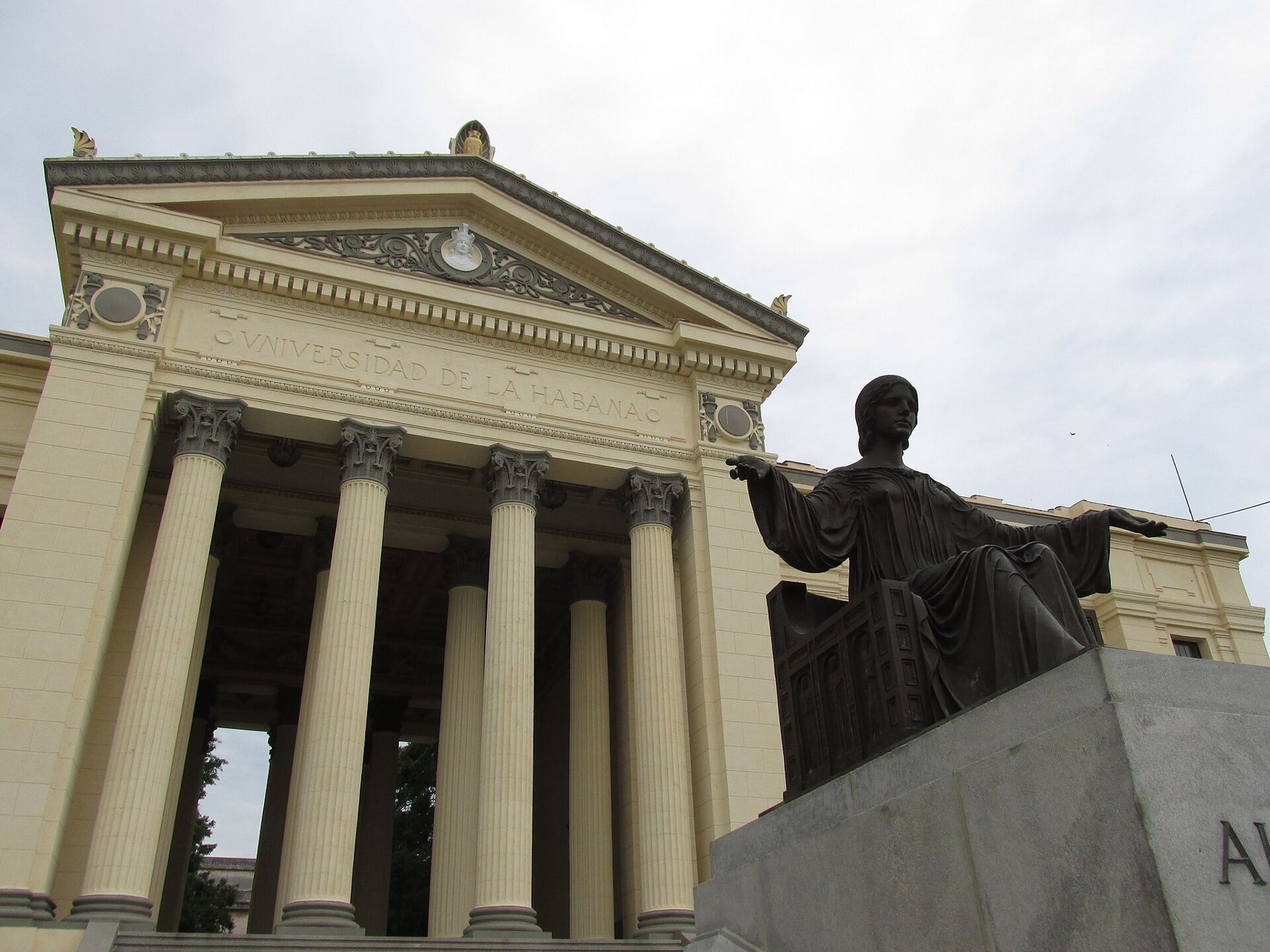
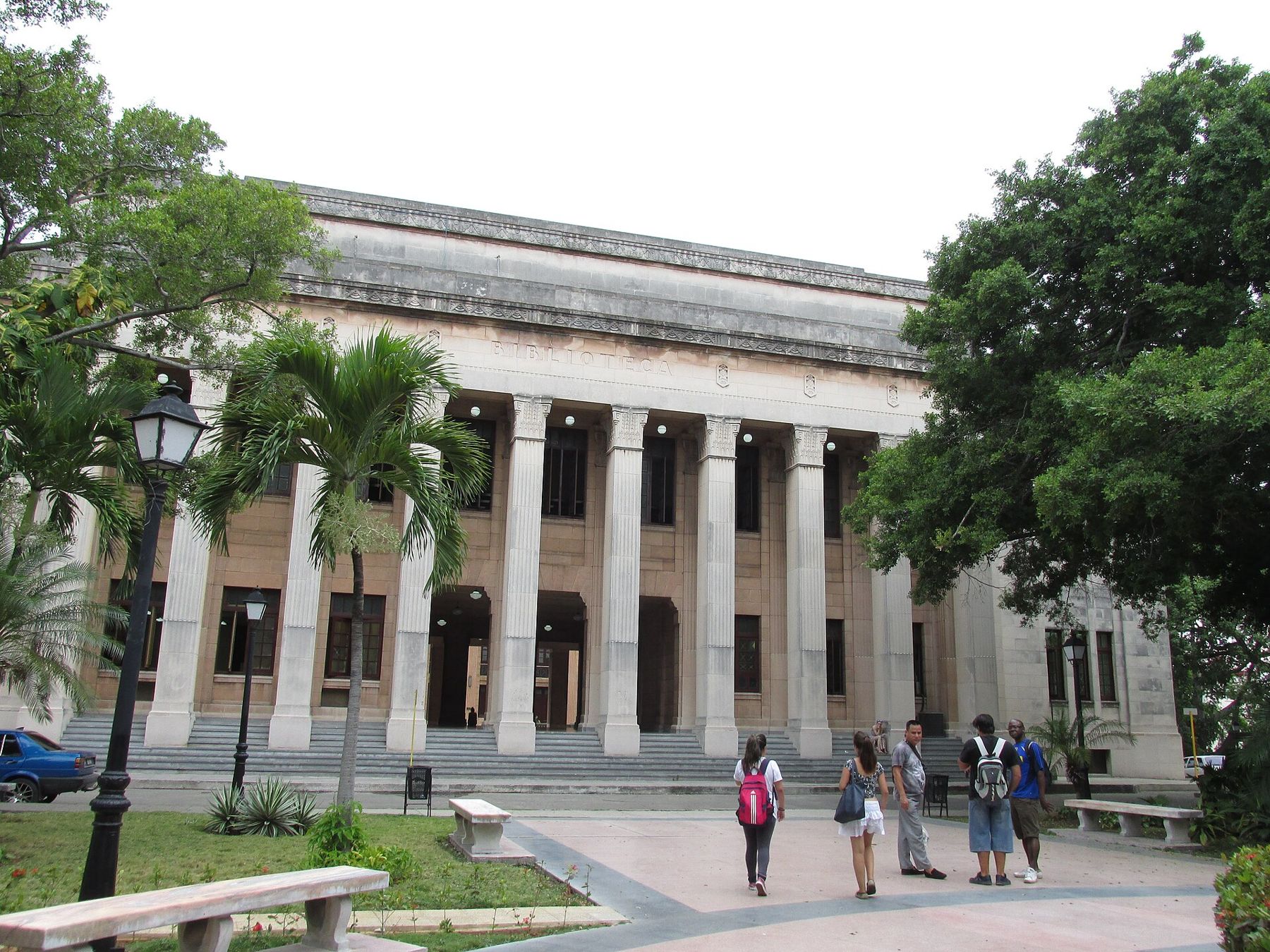
A few blocks east of La Rampa, on a hill, sits the University of Havana. Its main approach is a monumental stone staircase, the Escalinata, rising to a bronze statue of a seated woman with outstretched arms, the Alma Mater. The stairs are a meeting point for students, and on a weekday morning the sound is of a hundred overlapping conversations.
 Flip it overThe old American cars, explainedPhoto: Fraganda, CC BY-SA 4.0
The campus itself, with its neoclassical buildings around a central courtyard, is a working university; visitors usually walk the steps and the outside of the grounds rather than wander into buildings. The university also keeps natural history and anthropology collections; whether and when they open to the public changes, so check before you go.
Mansions, gardens and side streets
Between the main avenues, Vedado's side streets hold its most peaceful walking. Early twentieth-century villas in every style, from neoclassical to art deco to early modernist, sit behind porches and iron fences, some lovingly kept, some divided into many homes, some empty and overgrown. Parks of a block or two in size, with tall ceibas and banyan-like fig trees, give shade and benches. Here the sounds drop to birdsong, a broom on a porch, a dog behind a gate, the occasional car.
The western edge of Vedado is bounded by the Río Almendares, beyond which lies Miramar and Quinta Avenida. Near the south-west corner lies the city's great nineteenth-century cemetery, a vast walled city of marble tombs and chapels that is one of the most remarkable sights in Havana and an extraordinarily quiet place to walk.
Plaza de la Revolución
At Vedado's southern edge, the grid ends at Plaza de la Revolución, an immense paved square built in the mid-twentieth century and used for national rallies and large public events. A tall star-shaped memorial tower to Cuba's nineteenth-century national hero rises on one side, with a large marble statue of him seated at its foot; the tower has housed a museum and a lookout, though access changes. Facing it across the square, ministry buildings carry huge steel line portraits on their façades.
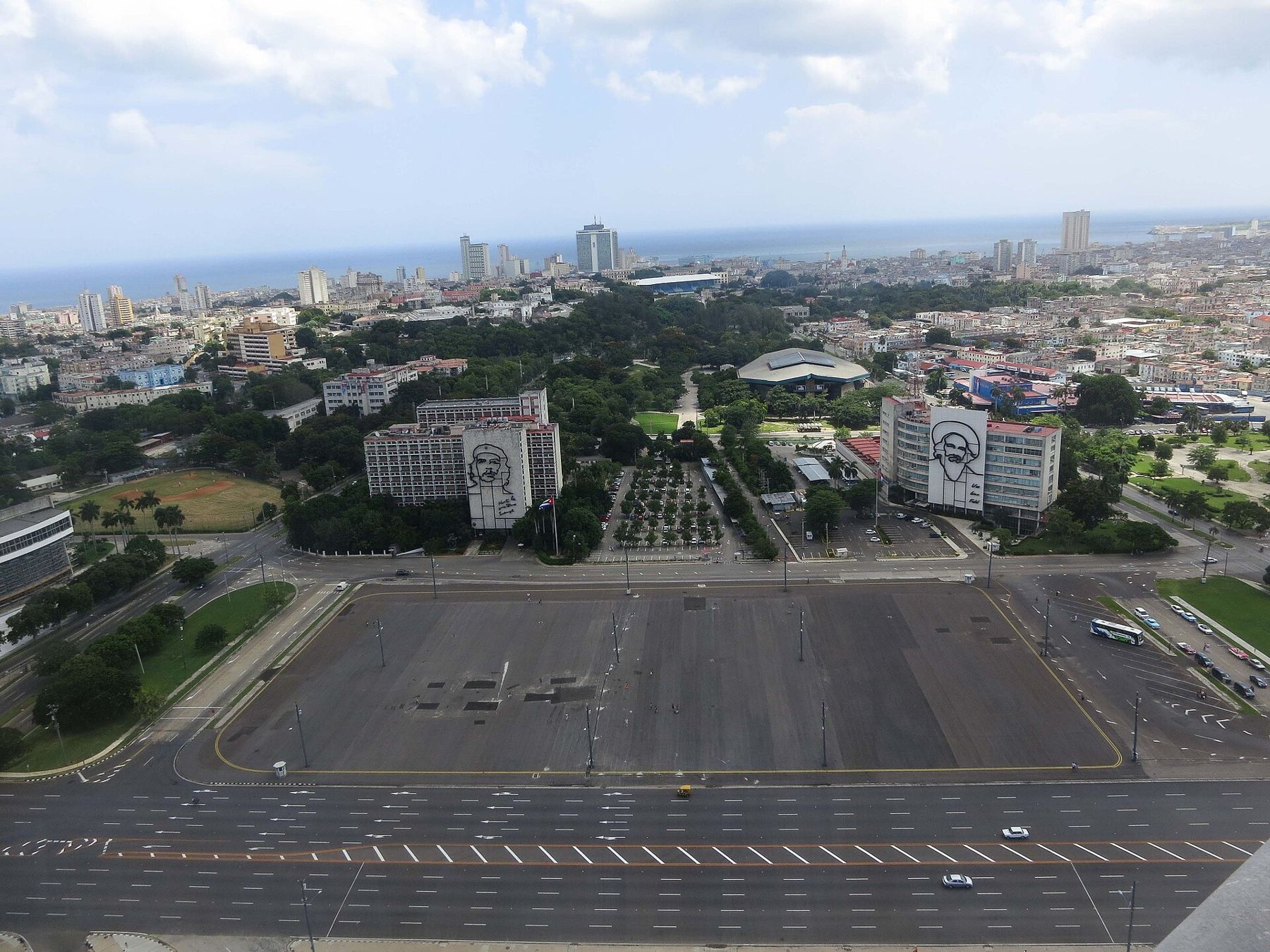
On an ordinary day the plaza is mostly empty, and its scale is part of the experience: traffic sounds far away, voices disappear, and the wind moves freely across the paving. It is also exposed, with little shade. Go early or late in the day, bring water, and be aware that photography of some government buildings and guards is unwelcome. Old convertibles wait nearby for passengers and add a splash of colour to the view.
Putting a walk together
A comfortable half-day route: start on the Malecón at the foot of La Rampa, climb Calle 23 to L, detour east to the university steps, then work your way south-west along the shaded side streets toward Paseo or Avenida de los Presidentes, ending at Plaza de la Revolución. A shared taxi or bus can carry you back toward the sea. In the evening, return to La Rampa for music; the guide to clave will help you follow what the band is doing.