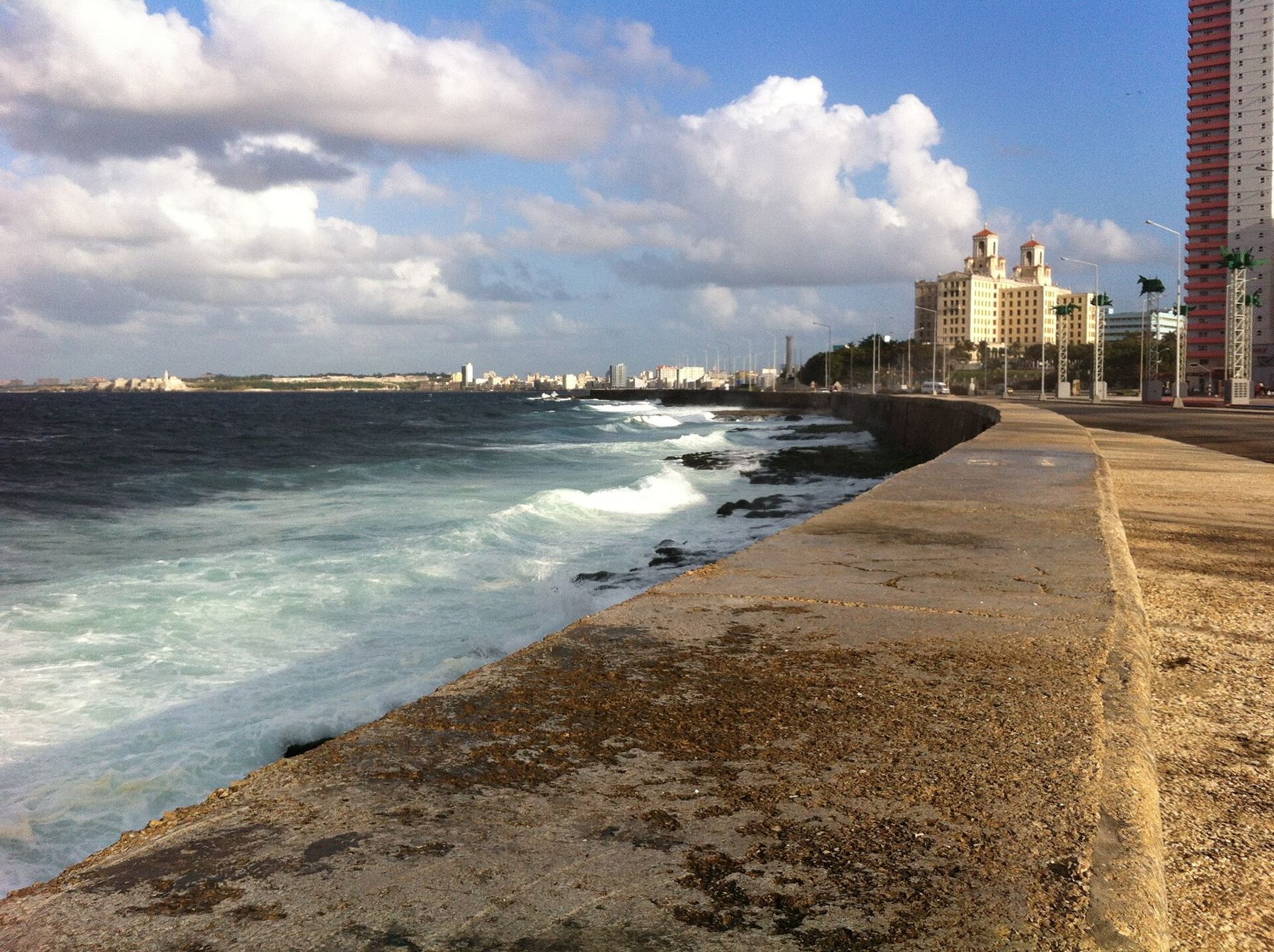
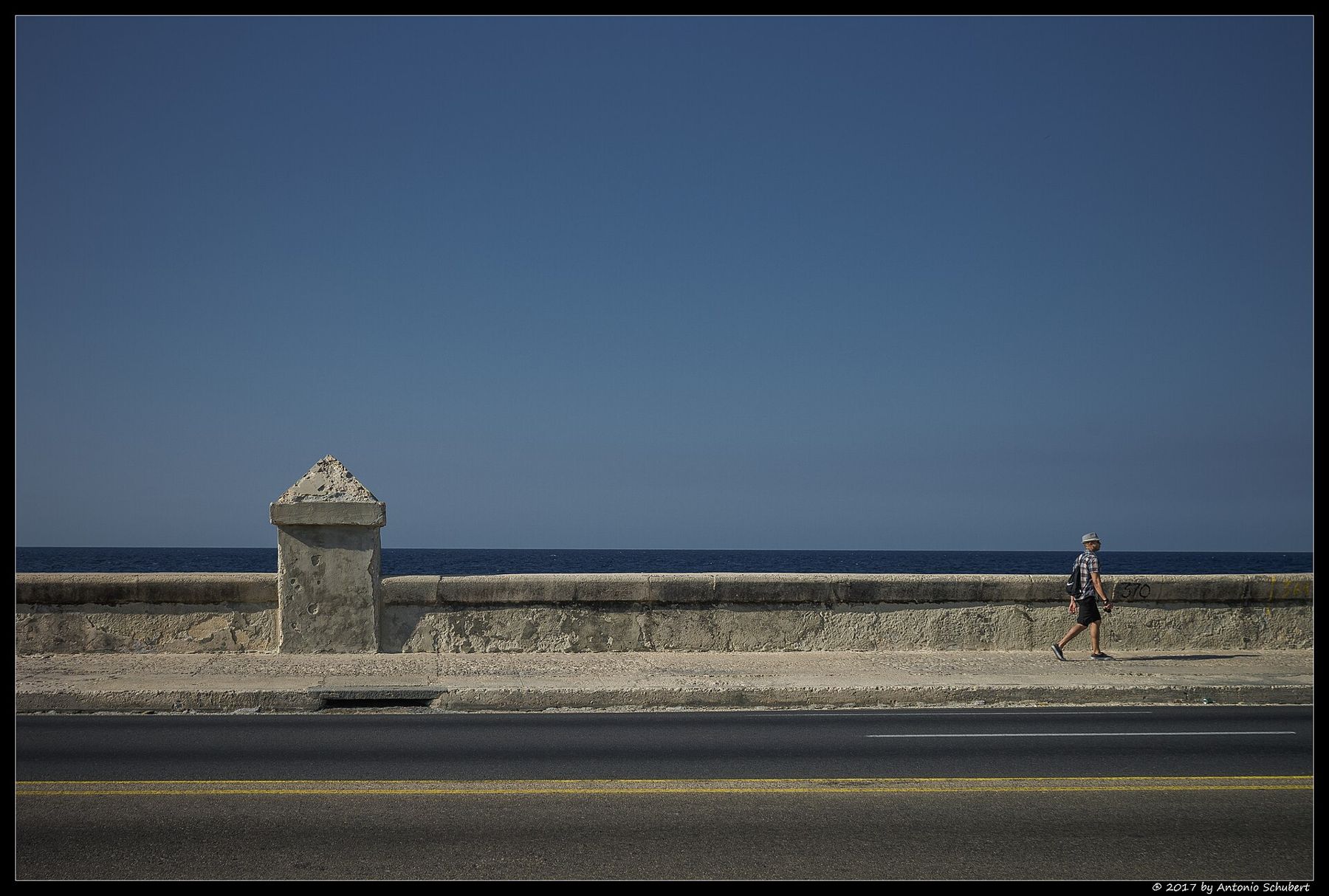
The Malecón is Havana's sea wall and seafront avenue, running for roughly eight kilometres from the harbour mouth, at the edge of Habana Vieja, west past Centro Habana and Vedado to the mouth of the Almendares river. On one side is a broad pavement and a low concrete wall; on the other, the Florida Straits. It is the city's front porch. In the heat of the day it can be almost empty. As the sun drops, people arrive from every neighbourhood behind it, and the wall becomes a place to sit, talk, flirt, fish, play music and simply look at the water.
A short history of the wall
Construction of the Malecón began in the first years of the twentieth century, and it was extended westward in stages over the following decades as the city grew toward Vedado and beyond. Before it, much of the shoreline was rough rock. The wall protected the city from the sea, gave it a grand avenue, and set the line along which the buildings of Centro Habana and Vedado face the water.
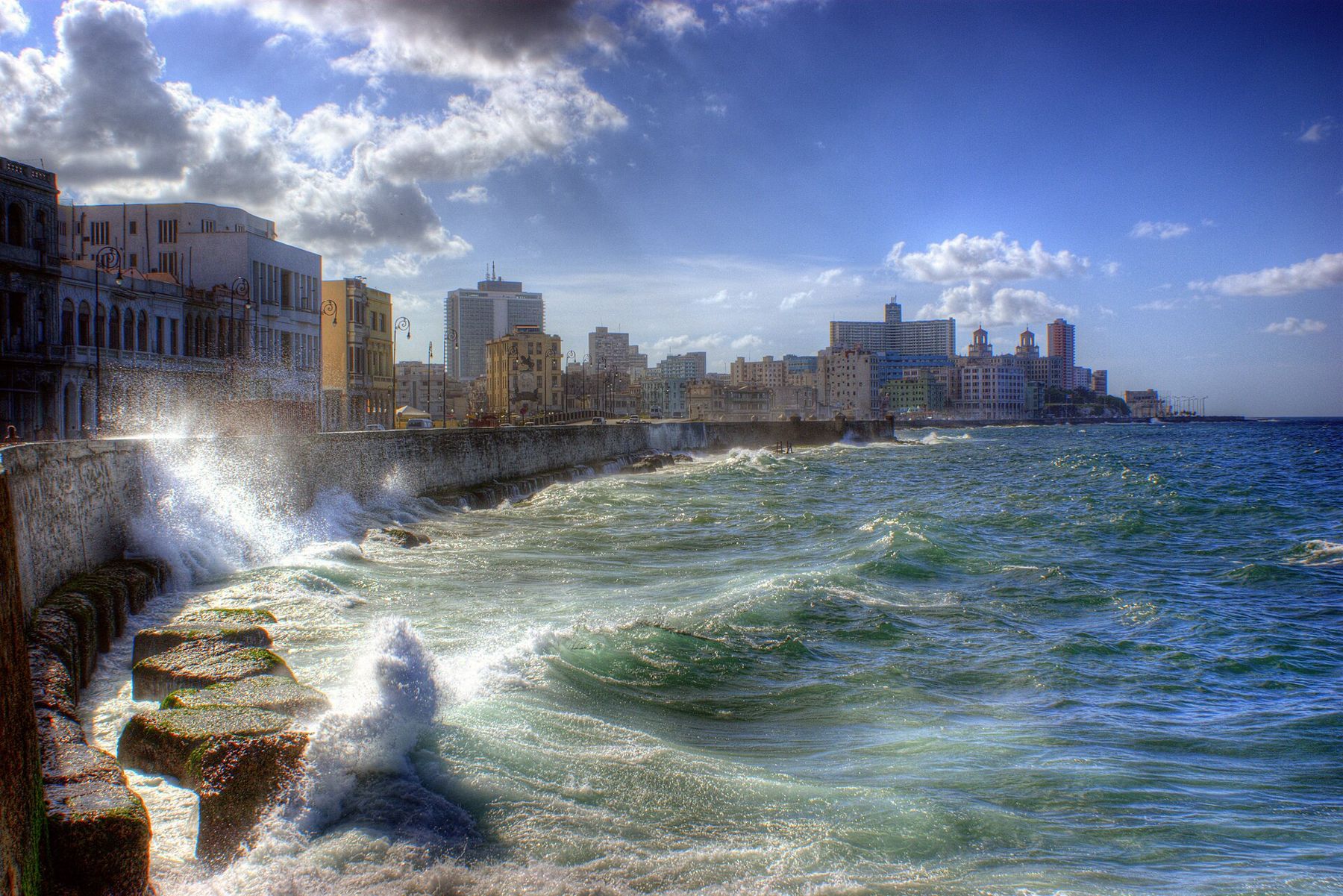
That line is the first thing you notice. Along the Centro Habana stretch, the façades are a row of colonnades and balconies, many weathered by salt spray, some restored, some still waiting. Further west, in Vedado, larger buildings and taller towers rise behind the road.
The walk
You do not need to cover all eight kilometres. Three stretches make good walks on their own.
- The harbour end. Start near the harbour mouth, where the old town meets the sea. Across the narrow channel stand the lighthouse and fortress of El Morro. If you want to cross over and see them up close, read El Morro, La Cabaña and the nine o'clock cannon.
- The Centro Habana stretch. The most characterful section, with arcaded façades directly across the road. This is where the sea comes over the wall hardest in winter. The streets behind it are explored in Centro Habana, block by block.
- The Vedado curve. The wall bends past a large early twentieth-century hotel on a rise and on toward the foot of La Rampa, the stretch of Calle 23 that climbs into Vedado.
Walking the full length takes a couple of hours at an easy pace. Most people do one section, then turn inland or catch a taxi back.
Waves over the wall
For most of the year the sea along the Malecón is fairly calm, slapping at the rocks below the wall. In the cooler months, roughly from late autumn to spring, cold fronts sweep down from the north. Cubans call the strong winds that come with them nortes. When a strong front arrives, waves can break against the wall and throw spray, sometimes solid sheets of water, high over the road. On the worst days the avenue is closed and seawater floods the lower streets of Centro Habana. Hurricanes can bring the same and worse.
Watching big waves hit the wall is a spectacle, and you will see people doing it. Keep your distance. The water can knock you down, the pavement turns slick, and the spray is full of salt and grit. Stand well back on the inland side and keep your camera dry.
Dusk, when the city arrives
The best hour is the last one before dark. The sun sets out to the west, behind Vedado, and the light goes gold across the façades. People start to collect along the wall: couples, groups of friends, families with children, older people in pairs. Someone has a guitar; someone else has a small speaker. A trio of musicians may walk the wall offering songs. Vendors pass with snacks, flowers or roasted peanuts in paper cones, calling out as they go.
It is the city's front porch.
The fishermen are part of the scene too. Some cast hand lines from the wall itself, coiling the line around a plastic bottle or a wooden spool; others paddle out on inflated inner tubes with a line and a bucket. You hear the soft plop of bait hitting the water, and the occasional cheer when something comes up.
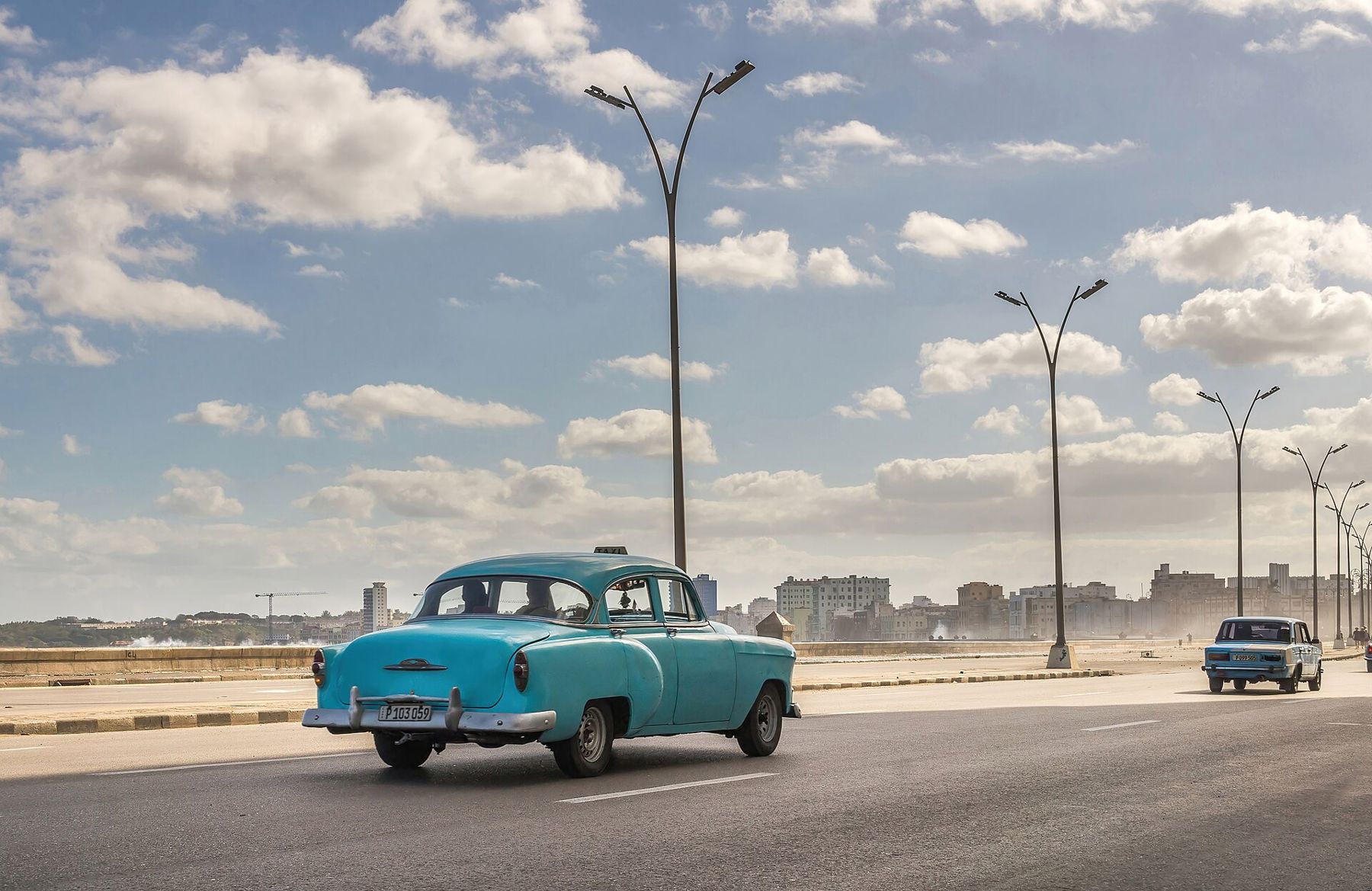
 Flip it overThe old American cars, explainedPhoto: Fraganda, CC BY-SA 4.0
At this hour the Malecón is also a road. Cars roll by, many of them the old American models that still work as taxis. Horns sound often and in conversation, a short beep to say hello, a longer one to say move over.
Monuments along the way
The wall is not only sea and sky. Along its length you pass a run of public monuments and parks. Near the Centro Habana stretch is a large park with an equestrian statue at its centre and open space where children play ball in the evening. Further west, a monument with tall columns remembers the sailors who died when an American warship exploded in Havana harbour in 1898, the event that led into the war between Spain and the United States. Close to the Vedado end there are open plazas used for public events. Each makes a natural place to pause, sit for a while and watch the sea from a slightly different angle. In the late afternoon, the light from the west turns the stone of these monuments warm, and the shadows of the palms stretch across the avenue toward the city.
After dark
Once the light has gone, the wall stays busy until late, especially on warm weekend nights. The music gets louder, more people sit down for the evening, and the breeze off the sea makes it the coolest place in town. From the Vedado end, it is a short walk up La Rampa to the clubs and concerts; the story on Vedado on foot gives you the neighbourhood's daytime shape.
A few practical notes:
- Bring water. There are few places to buy it along the wall itself.
- Watch the road. The avenue is wide and traffic moves fast. Cross at junctions.
- Mind your belongings. As in any busy public space, keep phones and bags close.
- Expect approaches. People may offer music, taxis, cigars or company. A friendly no is enough.
- Swimming is not a good idea. The rocks below the wall are sharp and the water can be rough. For a swim, the city goes to the beaches east of town.
If you have only one evening, give it to the Malecón. Sit on the wall facing the city for a while, then turn around and face the water. Behind you: horns, voices, a radio playing son, the tap of dominoes from a doorway across the road. In front of you: the deep slap and hiss of the sea against the rocks, steady as a heartbeat, the same sound the city has heard every night since the wall went up.