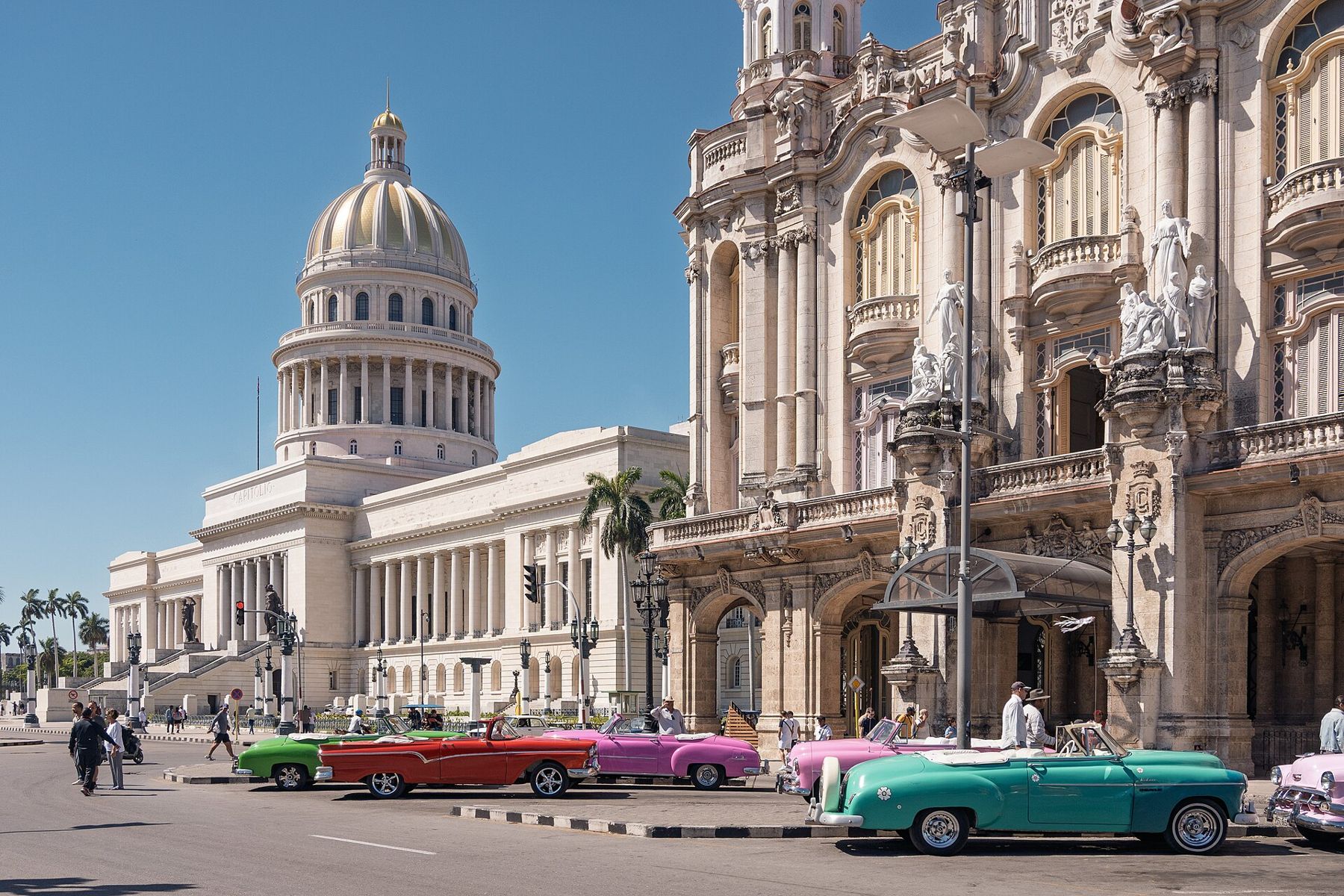
Stand by Parque Central for five minutes and they roll past: rounded fenders, fins, chrome bumpers, paint in pink, turquoise, cherry red and two tones at once. American cars from the 1940s and 1950s are part of Havana's street life in a way they are nowhere else. Some are polished showpieces offering rides to visitors. Many more are working vehicles, carrying people to work along fixed routes, and you can ride one for the price of a short trip across town. Here is why they are still here, and how to make use of them.
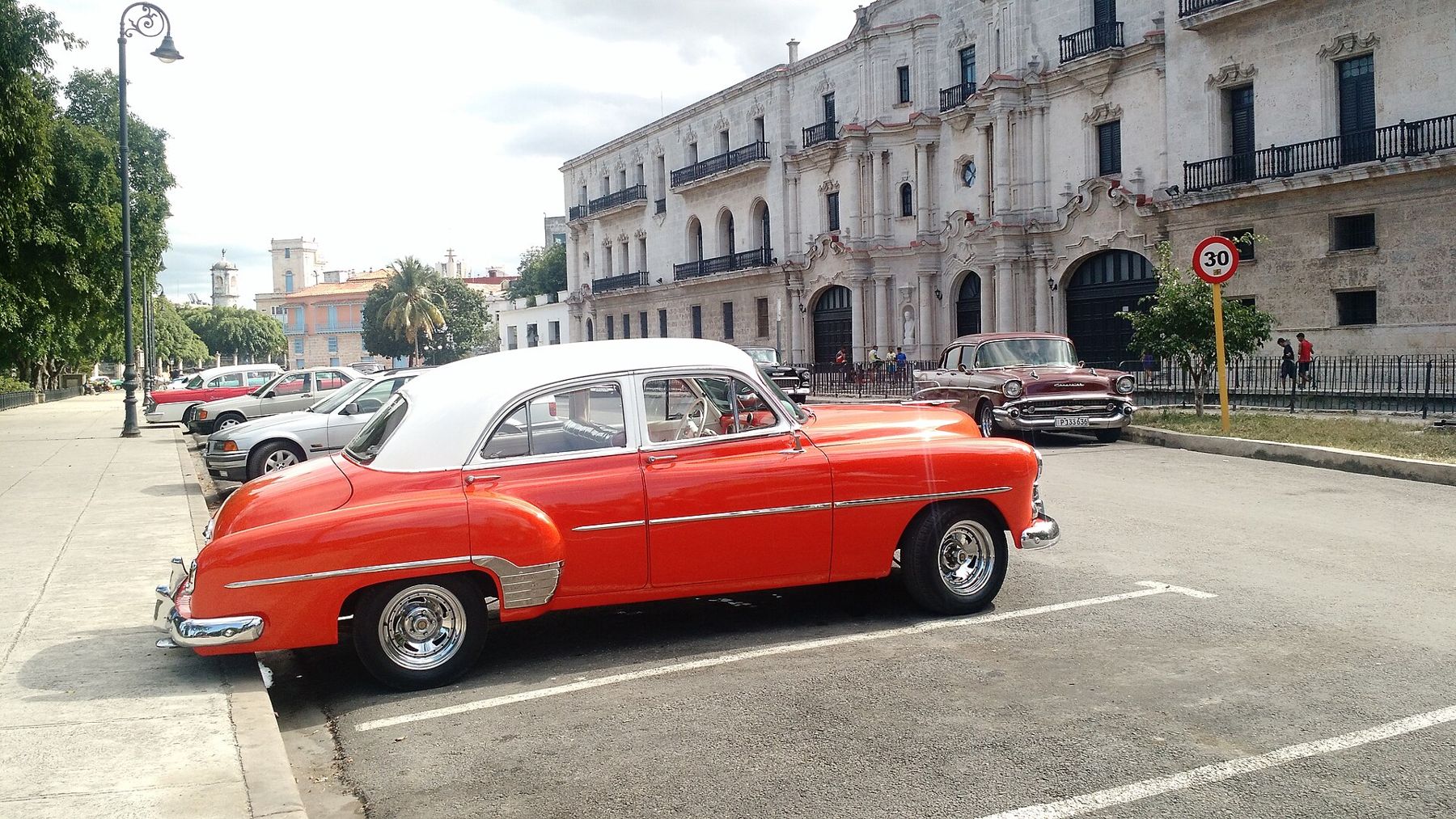
How they came to stay
Before 1959, Cuba was a big market for American cars. Havana's streets were full of the latest models, shipped across the Florida Straits. After the revolution, relations with the United States broke down, and from the early 1960s the American trade embargo ended the supply of new US cars and official spare parts.
The cars already on the island stayed. For decades it was difficult for most Cubans to buy a new car at all, and the older cars, which owners could sell to each other, became valuable family property. They were passed down, repaired, rebuilt and repaired again. The result is a fleet of vehicles that are sixty or seventy years old and still on the road every day.
What is under the hood
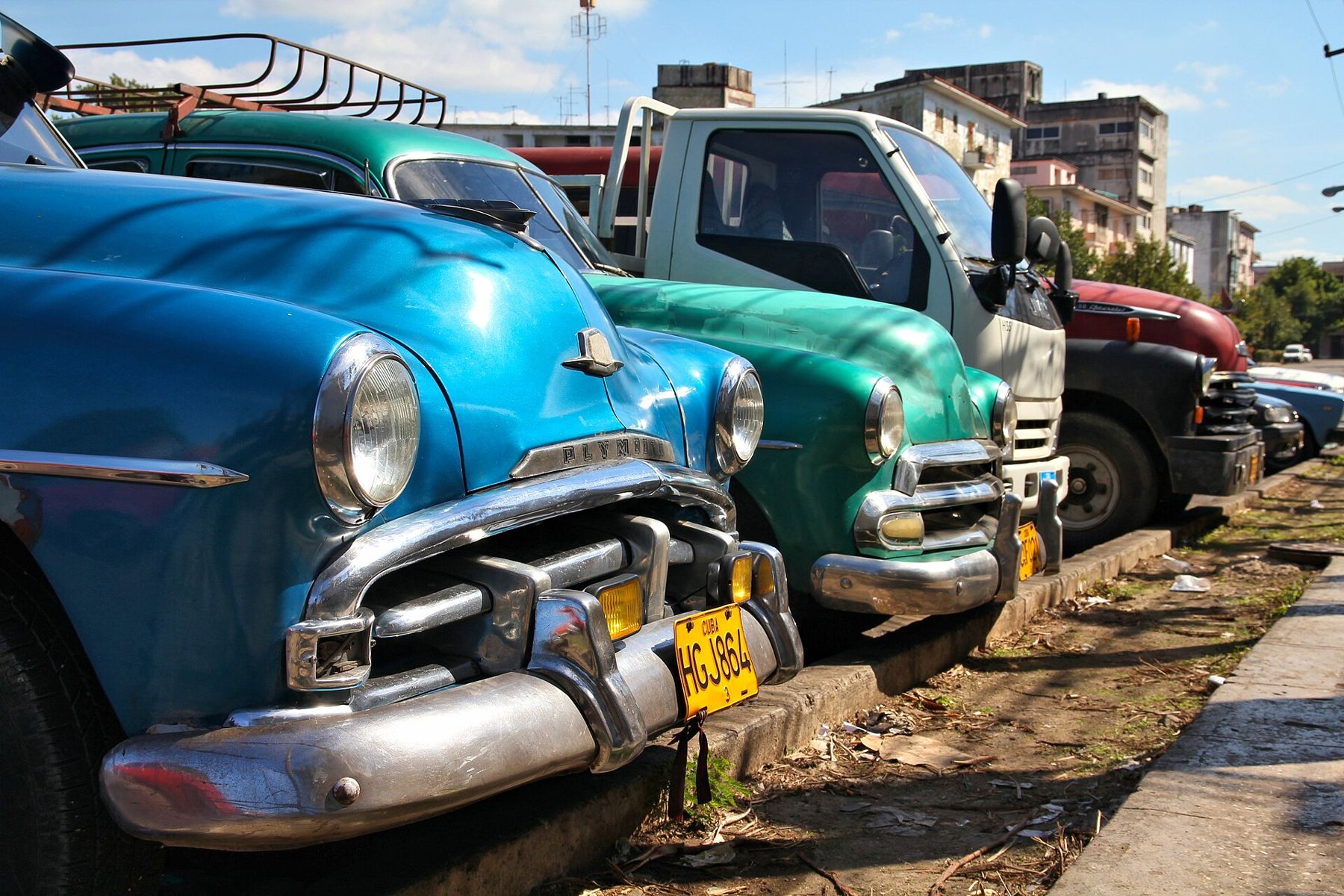
Keep a car running for six decades without the original parts and you end up with something unique. Many old American cars in Havana are, mechanically, a mix of everything that passed through Cuba since.
- Engines. Many original petrol engines were replaced over the years with diesel engines, often from Soviet-era or Eastern European vehicles, later from Asian manufacturers. Diesel was cheaper and the engines easier to maintain.
- Parts. Mechanics machined their own parts, adapted pieces from other models, and traded with each other. Many cars carry brakes, gearboxes and suspension parts from vehicles their designers never imagined.
- Bodywork and paint. Dented panels are hammered out and patched. Paint is whatever could be found. Some cars are now restored with great care; others are held together with skill and determination.
The phrase you will hear for this approach is resolver, to solve, to sort it out. It applies to far more than cars in Cuba, but cars show it most clearly.
The shared taxis
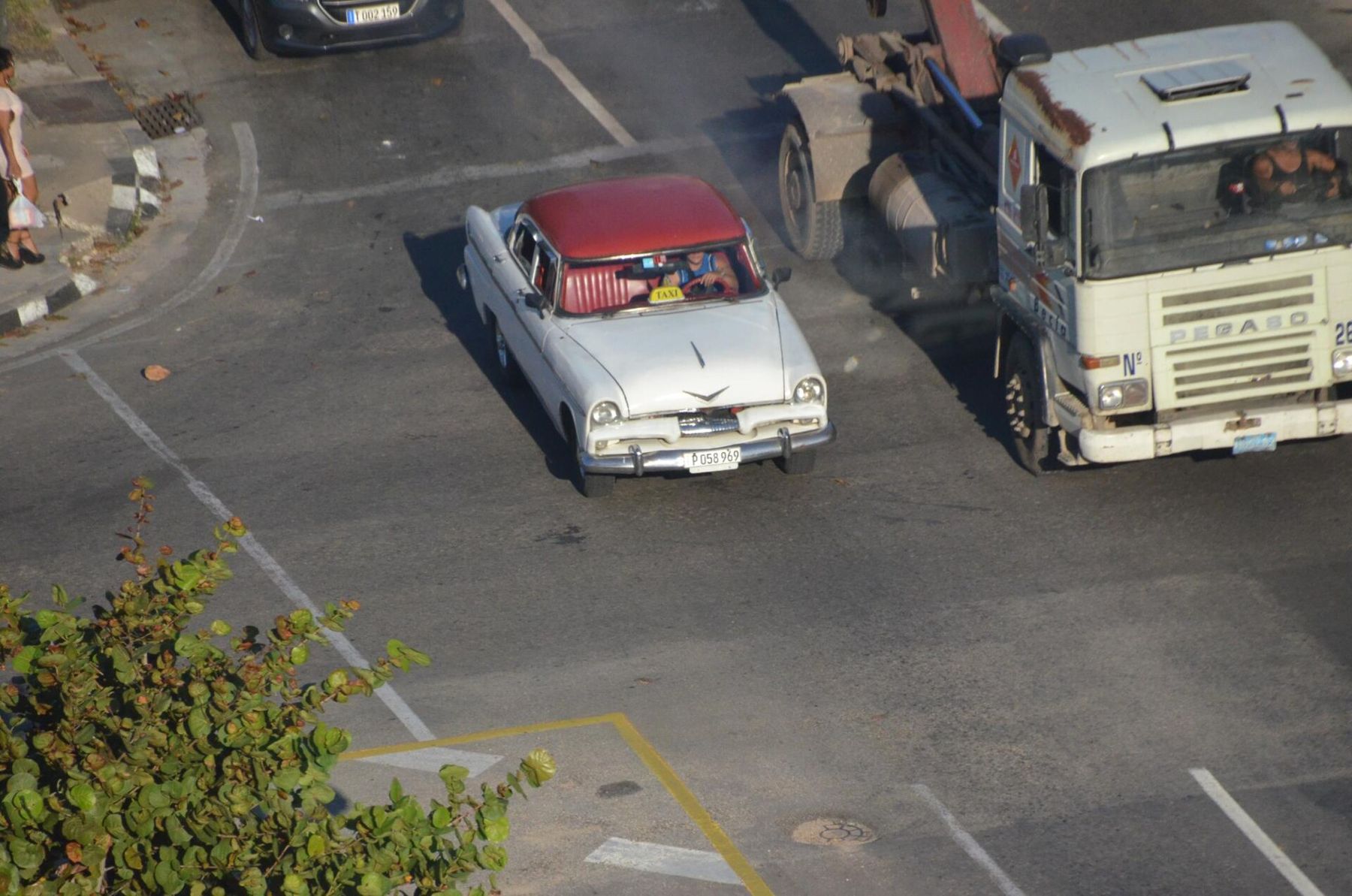
For many Havana residents, the old cars are the transport system. Shared taxis, often called almendrones, run along fixed routes on the main avenues, picking up and dropping off passengers along the way. They are cheaper than private taxis and quicker than a bus, and riding in one is a good way to see the city at street level.
How it usually works:
- Stand on a main avenue on the side going in your direction.
- When an old car with a taxi sign slows down, call out or signal the area you want to go to.
- If it is going your way, the driver nods or waves you in. If not, they drive on.
- You squeeze in with other passengers. Shut the door firmly but not violently; old doors are particular.
- Pay the driver when you get out. Fares are fixed per route and are low; ask fellow passengers if unsure.
Routes, fares and payment rules change, so ask locally and check before you go. The broader picture of buses, bicycle taxis and walking is in getting around Havana by ear.
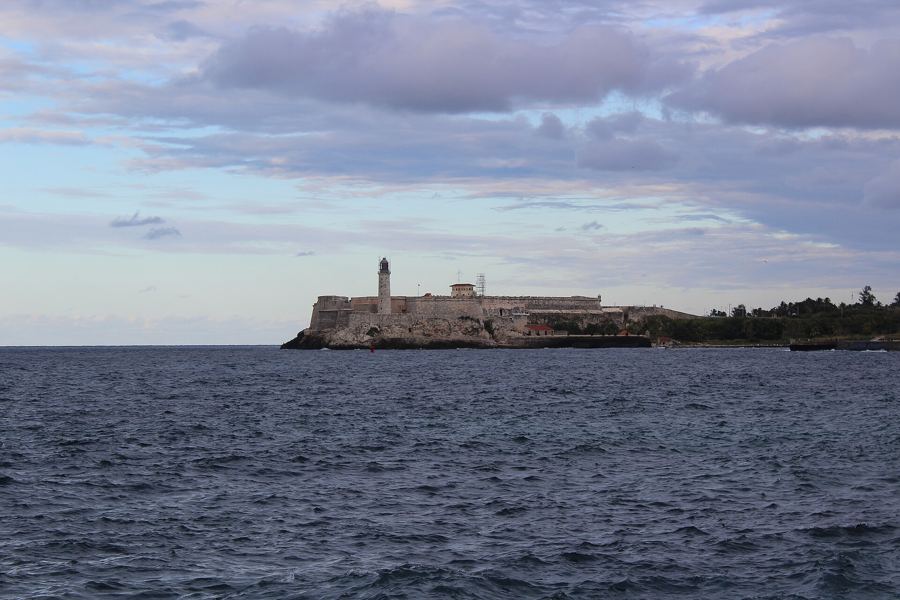 Flip it overEl Morro, La Cabaña and the nine o'clock cannonPhoto: Knomrm, CC BY-SA 4.0
The convertible rides
The polished convertibles lined up around Parque Central, near the Capitolio and the Gran Teatro de La Habana, are a different thing. These are tourist rides, usually priced by the hour, with a driver who will take you along the sea wall, through Vedado, and to the big monuments. They are fun, they make good photos, and many drivers are full of stories about their car's history. Agree on the route, the time and the price before you set off. Prices vary widely, and many drivers prefer cash; check before you go and read money, cards and getting online for the general picture.
A good time for a ride is late afternoon, when the light turns soft and you can end on the Malecón at dusk.
Keep a car running for six decades without the original parts and you end up with something unique.
How the cars sound
Close your eyes on a busy Havana avenue and the old cars are easy to pick out. A swapped-in diesel gives a heavy, uneven clatter that does not match the elegant body around it. Exhausts rumble and pop, sometimes with no silencer at all. Doors close with a deep metal clunk, and drivers often slam them hard because the latches need it. Horns are used constantly and conversationally: two quick taps to say a taxi has space, a long blast at a pedestrian stepping out, a friendly beep to a neighbour. At the curb, shared-taxi drivers and the people who help fill their cars call out destinations in a fast singsong, naming an avenue or a district again and again until the seats are full. Inside, there is often a radio or a small speaker playing reggaeton, timba or old son, loud enough to compete with the engine.
The American cars get the attention, but listen and watch for the rest of the fleet. Soviet-era cars from the 1970s and 1980s, boxy and practical, are just as common in many neighbourhoods. Motorbikes with sidecars, newer imported cars, buses old and new, horse-drawn carts in some outer districts, and bicycle taxis all share the road. Each sounds different: the high whine of a scooter, the rattling diesel of an old sedan, the bell of a bicycle taxi working through a narrow street.
Photographing the cars
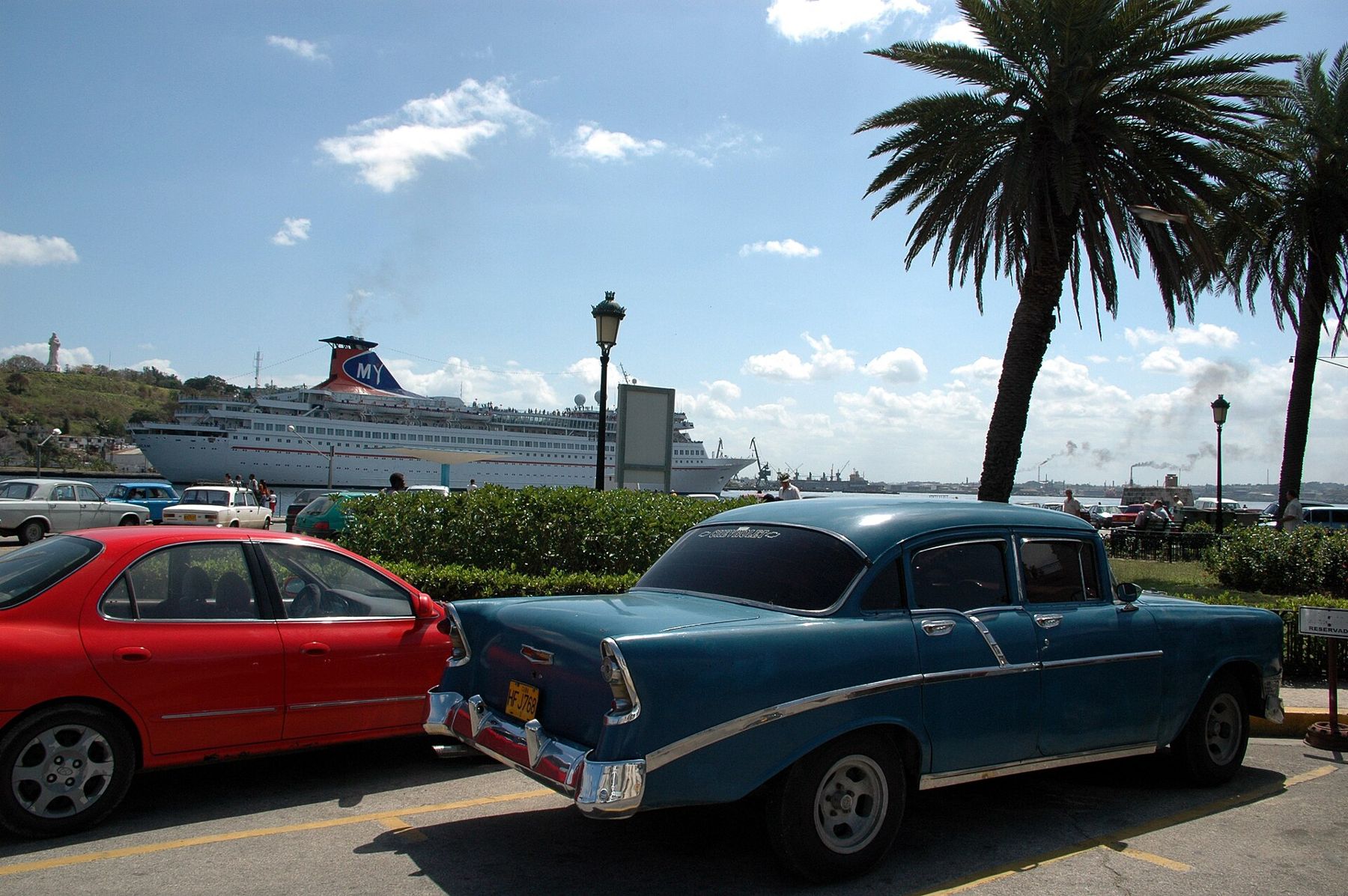
Cars parked in public places are fair to photograph, and many owners are proud of them. If a driver is standing beside a car, a nod or a quick question first is polite. For posed photos with the showpiece convertibles, drivers sometimes expect a small tip; ask first. Early morning and late afternoon light suit the chrome and colours best, and a car framed against the Capitolio or a faded colonial façade makes the city's story in one picture.
Above all, take a ride in a working shared taxi at least once. Sit on a sprung bench seat, wind down a window by hand, and listen to the engine clatter as the car carries you along the sea. It is everyday Havana, and it has been running this way for longer than most of its passengers have been alive.