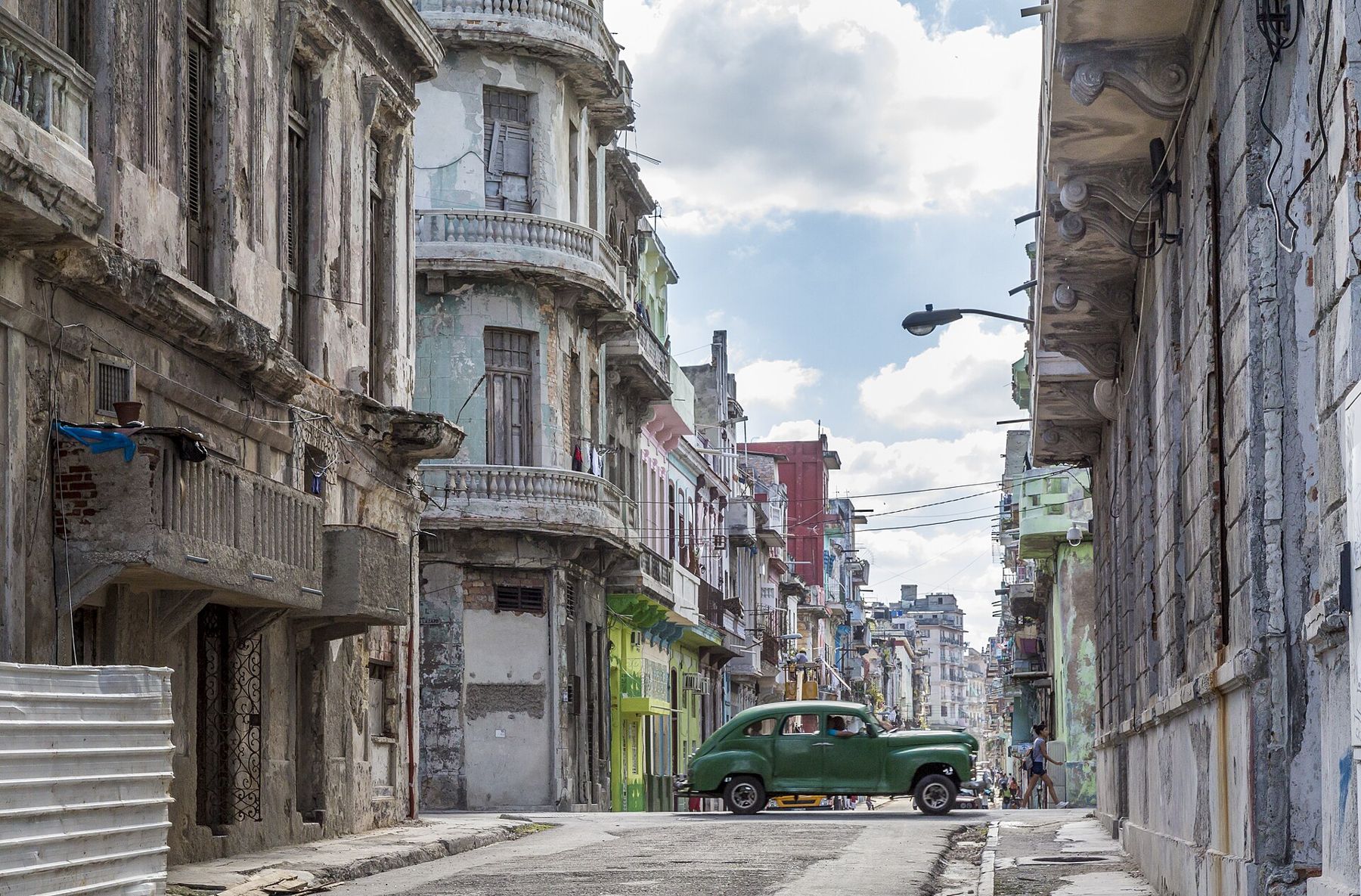
West of the Paseo del Prado, the broad tree-lined promenade that marks the edge of the old city, Havana changes character. The streets of Centro Habana are long and straight, the buildings three or four storeys high, and nearly every one of them is a home. There are few museums here and almost no monuments. What there is, in abundance, is life lived in public, and it makes Centro the loudest and most talkative part of the city.
What you are walking through
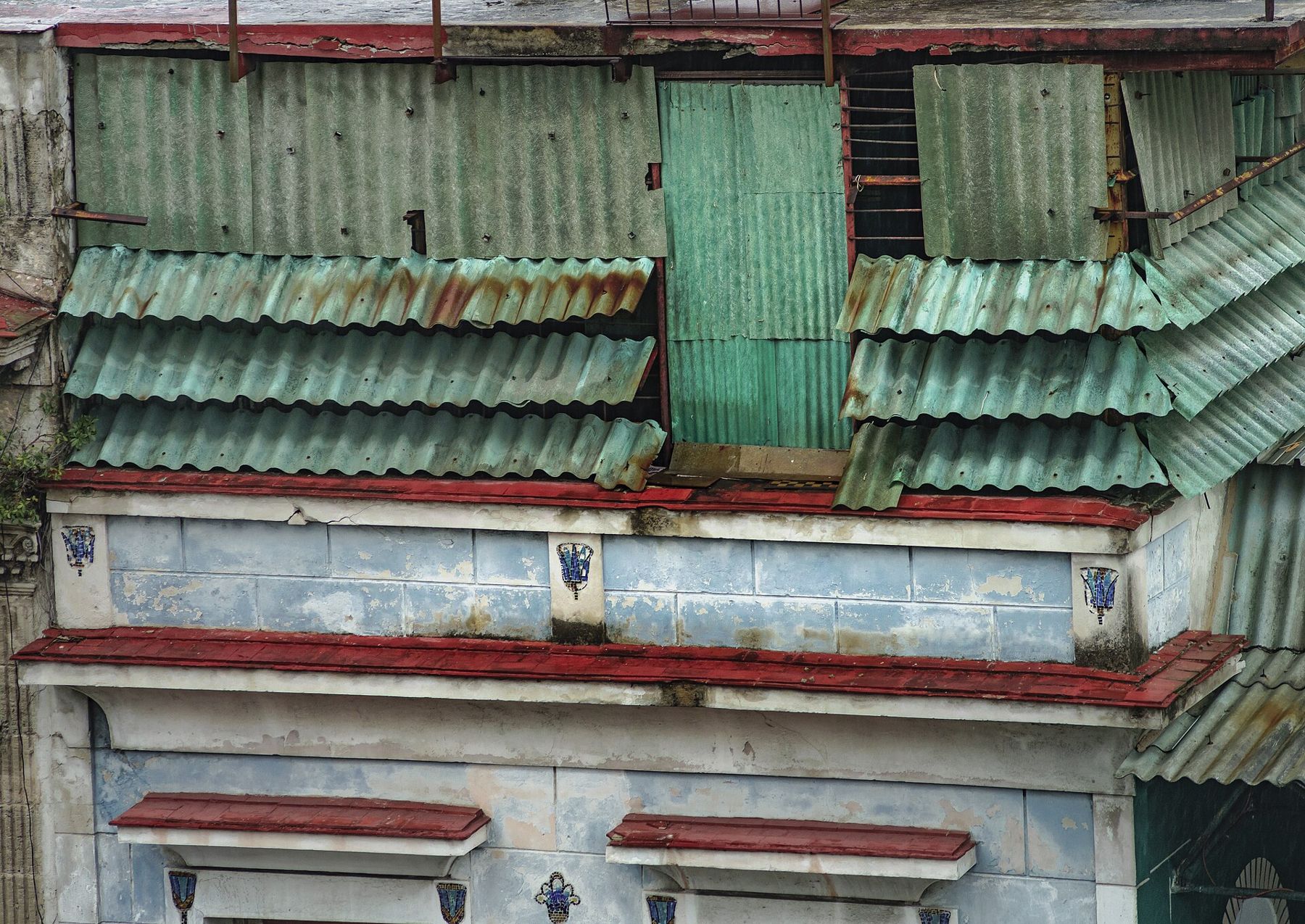
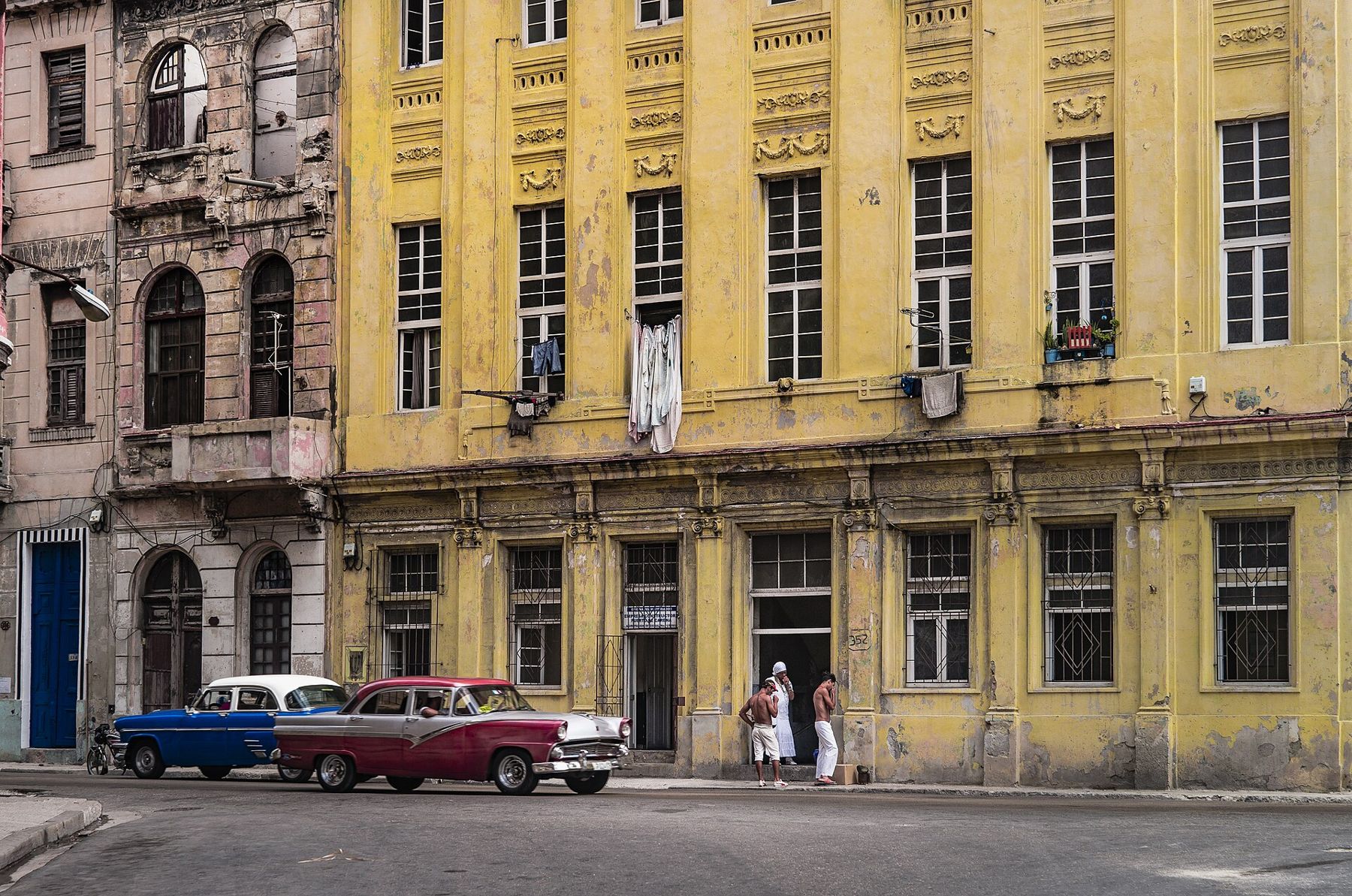
Centro Habana grew in the nineteenth and early twentieth centuries as the city spread beyond its walls. Its blocks are filled with townhouses and apartment buildings with tall doors, high ceilings and iron or stone balconies, many of them divided over the decades into smaller homes. Some buildings are freshly painted and repaired, others are propped with timber or missing their upper floors. You will see both on the same block, often side by side.
Look up as you walk. The upper floors carry most of the architecture: carved stone brackets, painted plaster, columns, stained-glass fanlights over tall doors, and balconies crowded with plants, birdcages and drying laundry. The main streets run roughly east to west: San Lázaro near the sea, then Neptuno, San Rafael and others, crossed by longer avenues such as Galiano. To the north the whole district is bounded by the sea wall of the Malecón, and if you get lost, walking toward the sound of the sea will always bring you to it.
The voices of the street
The single most characteristic sound of Centro is the street vendor's call, the pregón. Sellers of bread, peanuts, fruit, brooms or sweets walk or cycle through the streets announcing their wares in a half-sung phrase, sometimes with a little melody, sometimes just a long drawn-out vowel. The tradition is old enough that it found its way into popular songs, and some vendors still treat it as a small performance.
Listen also for the conversation between street and balcony. People call up to neighbours on the second floor, and a bucket or a bag on a rope is lowered to collect a delivery without anyone climbing the stairs. Radios and televisions play through open doors and windows, and on a hot afternoon you can follow a baseball game or a telenovela for a block just by walking.
Dominoes, baseball and the solar
On corners and in doorways, folding tables come out for dominoes, played in Cuba with a double-nine set and usually in pairs. The game is loud: players slap their tiles down hard, and a winning play is announced with a crack that carries down the street. Watching is fine; offering advice is not.
Children play baseball and football in the street with whatever ball and bat they have, pausing for passing cars. Some of the larger old houses became solares, buildings where many families share a courtyard and facilities. Solares were one of the settings where rumba developed, and the Callejón de Hamel, a painted alley known for its Sunday rumba gatherings, is in Centro Habana too.
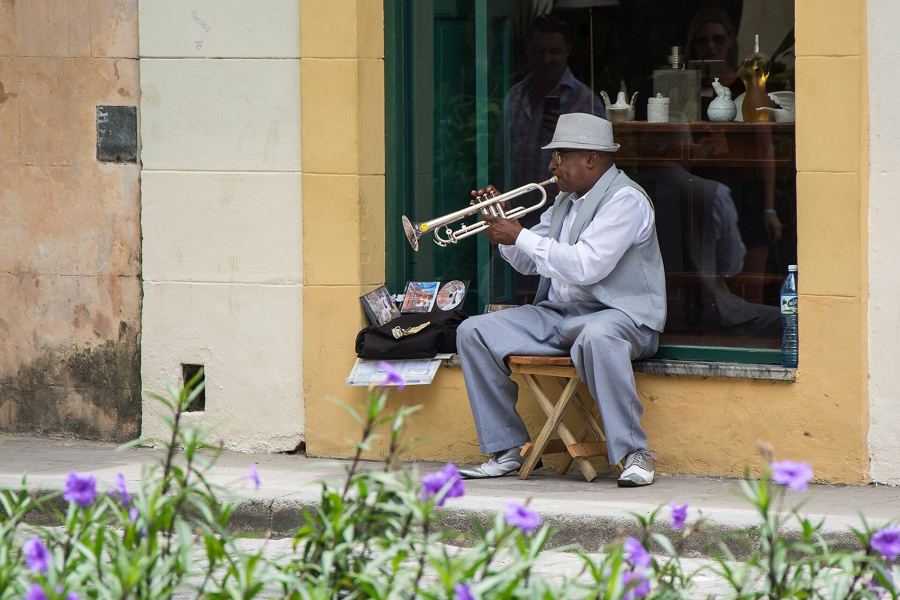 Flip it overSon, the sound under everythingPhoto: kuhnmi, CC BY 2.0
Galiano, San Rafael and the Barrio Chino
A century ago, the streets around Galiano and San Rafael were among the city's busiest shopping districts, with department stores and arcades. Some of those grand buildings still stand, a few of them repaired, and the pavements here remain crowded with people buying, selling and waiting for rides.
Near the southern edge of Centro, a gateway marks the small Barrio Chino, Havana's Chinatown. Chinese workers came to Cuba in large numbers in the nineteenth century, and their descendants left a mark on the city's food, its associations and its music, including the shrill corneta china, a reed horn that is played in carnival processions in eastern Cuba. Today the district is small, but it is still an interesting detour.
Walking sense
Centro is a working neighbourhood, and the main thing it asks of you is attention:
- Watch your feet. Pavements can be broken, uneven or interrupted by works, and drainage covers are not always in place.
- Watch overhead. Balconies sometimes drip water from plants or washing, and old buildings can shed bits of plaster. Do not linger under scaffolding or visibly damaged façades.
- Keep valuables low-key. Carry only what you need, keep your phone in your pocket between photos, and be aware in crowds, as you would in any big city.
- Ask before photographing people, especially through open doors. These are homes, not sets.
- Expect approaches. People may offer rooms, rides or music; a friendly no is enough.
Late at night, stick to the main lit streets or take a taxi; the side streets are dim, and broken paving is harder to see. Most of the district is easy to walk in daylight. The sea breeze along the Malecón edge is welcome in the afternoon heat, while the inner streets can feel close and hot at midday.
A loose route
There is no correct way to walk Centro, and getting slightly lost is part of the point. A simple outline: start at the Prado and walk west along Neptuno or San Rafael, cross Galiano and drift south toward the Chinatown gateway, then bend north again toward the sea, ending on the Malecón as the light softens. If it is a Sunday, plan your walk to pass the Callejón de Hamel around midday.
From the western edge of Centro, the streets climb gradually into Vedado, where the blocks get greener and quieter; the Vedado walk picks up from there. Older taxis and shared cars run along the main avenues if your legs give out, and the getting around guide explains how to flag one.