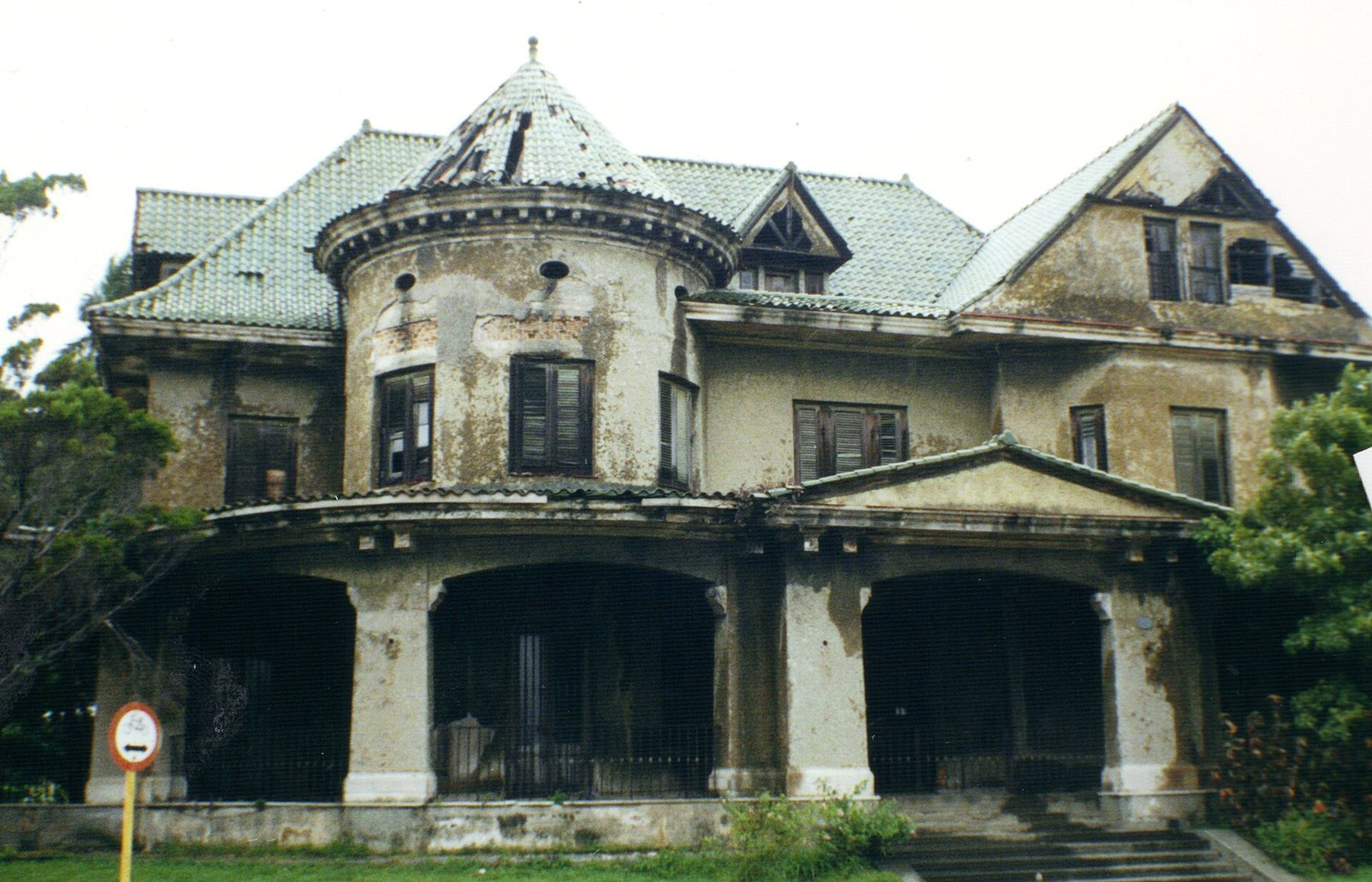
Most visitors to Havana never cross the Río Almendares, and the city they come home with is the dense, noisy one of the old centre. On the far side of the river lies a different Havana. Miramar, laid out in the early twentieth century as a garden suburb for the wealthy, is spacious, green and quiet. Its main artery, Quinta Avenida, Fifth Avenue, is one of the most elegant streets in the Caribbean. You come here for calm, for the sea, and for a single remarkable model of the city.
Crossing the river
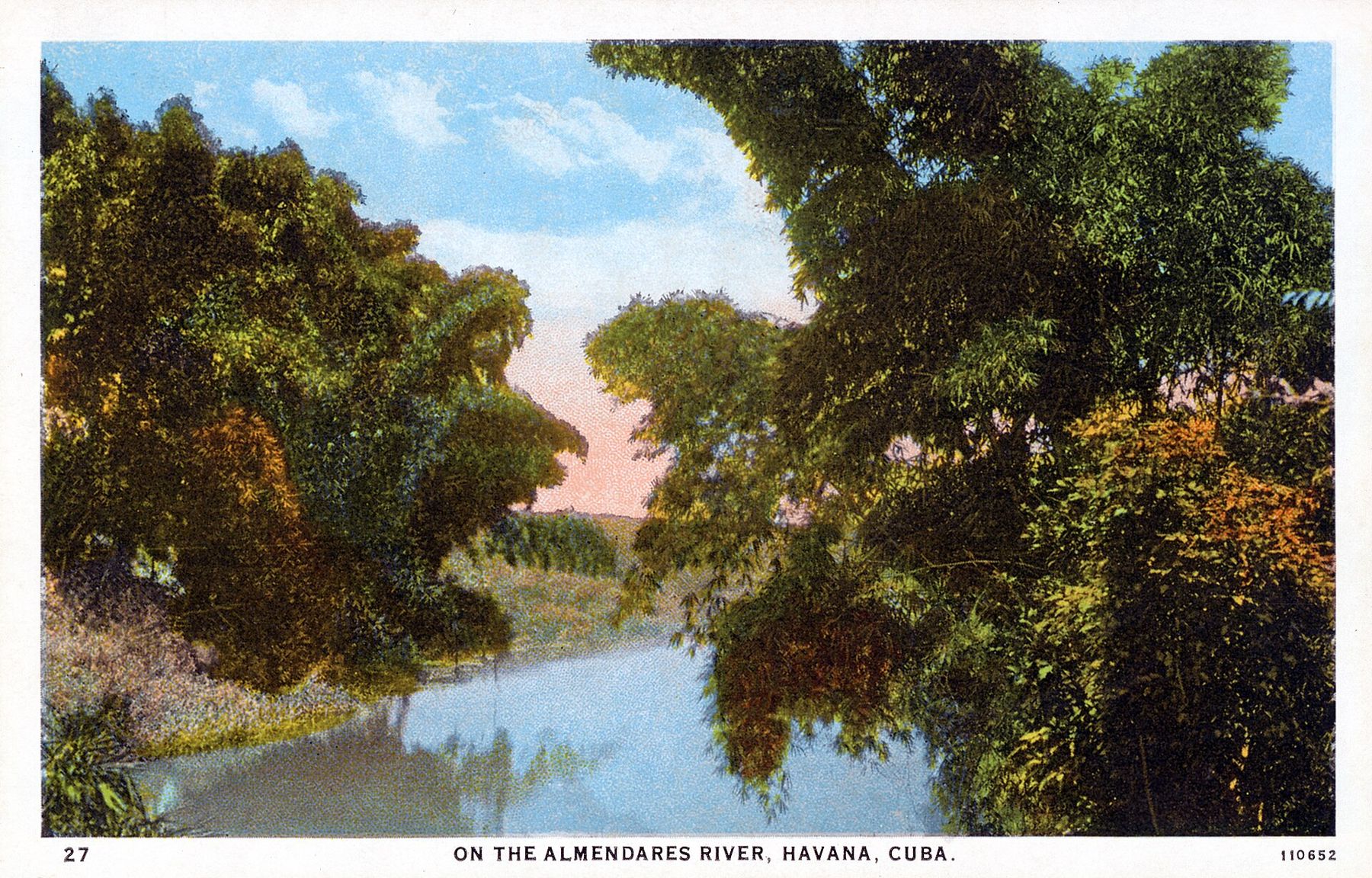
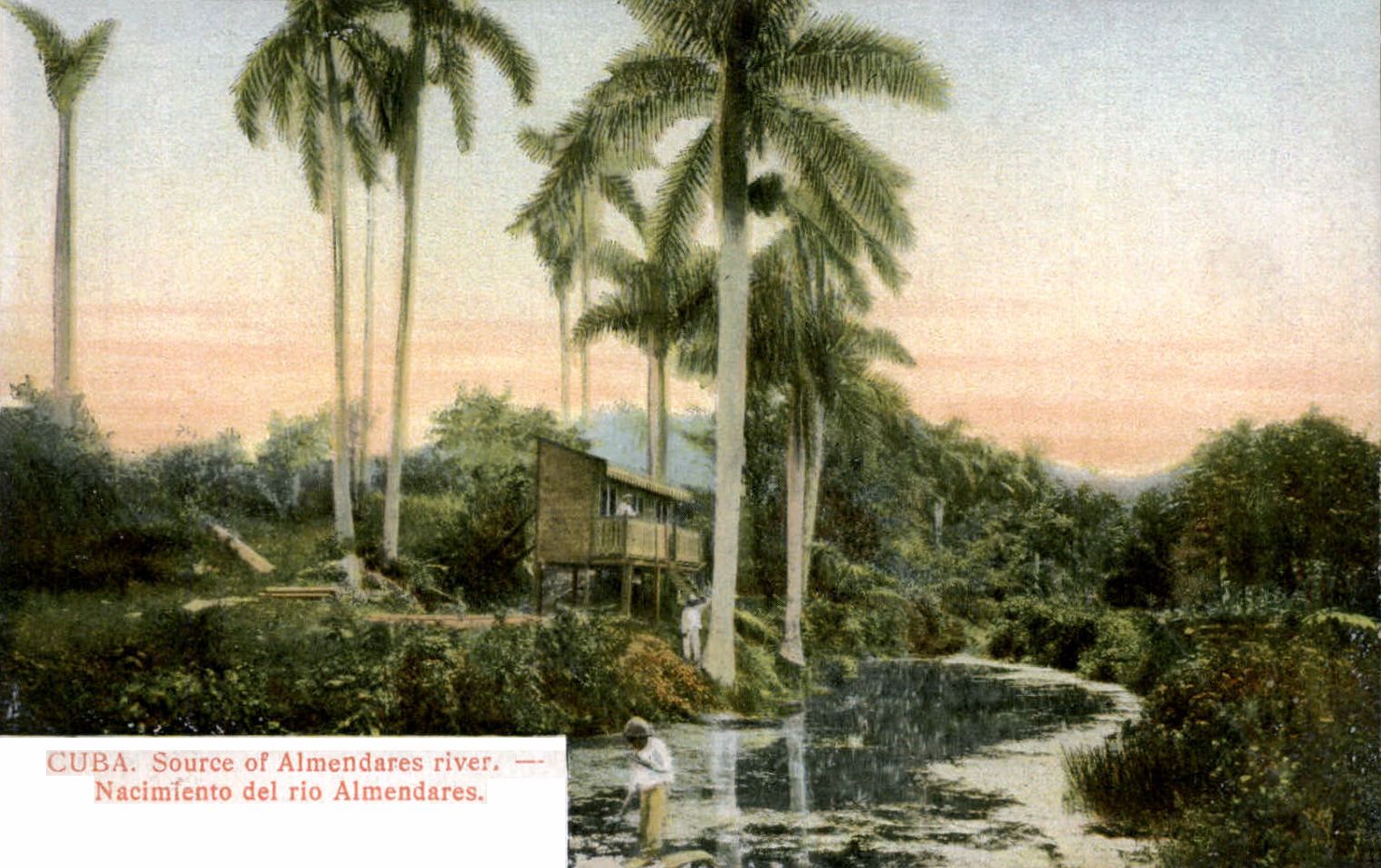
The Río Almendares marks the boundary between Vedado and Miramar. Two tunnels carry traffic under its mouth, one at the end of the coastal road and one linking Calle Línea with Calle 7, and a road bridge crosses farther upstream. Going through the tunnel, the city noise drops to an echoing roar and then opens suddenly onto trees and wide streets on the other side.
Upstream, the river runs through a strip of woodland called the Bosque de La Habana, part of a larger metropolitan park. It is one of the few places in the city where you can walk among tall trees with vines hanging down, and it is also a site where offerings connected with Afro-Cuban religion are sometimes left by the water. As in Regla, treat such objects with respect and leave them undisturbed; the story on batá drums explains a little of that tradition.
Quinta Avenida
Quinta Avenida runs west from the river for many kilometres, parallel to the coast. Its defining feature is the broad central walkway, planted with trees, shrubs and flowers and lined with benches and old ornamental lamps. Walking along the middle of the avenue, you are surrounded on both sides by traffic yet strangely sheltered from it, the sound filtered through leaves. In the early morning, joggers, dog walkers and people waiting for a ride share the path.
Many of the great houses along the avenue and its side streets now serve as embassies, ambassadors' residences, offices and institutions. Flags hang by their gates, and guards stand outside some of them. It is fine to walk past and admire the architecture, but do not photograph guards or security posts. One embassy, a tall concrete tower built in the late Soviet period, rises far above everything around it and is visible from much of the western city.
Farther along the avenue, a large church with a dome and twin towers, built in the mid-twentieth century, is one of the biggest in Havana. Its interior is decorated with large painted scenes along the walls, and the acoustics during a service are worth hearing if you happen to pass while the choir sings; services are religious occasions, so enter quietly and dress modestly.
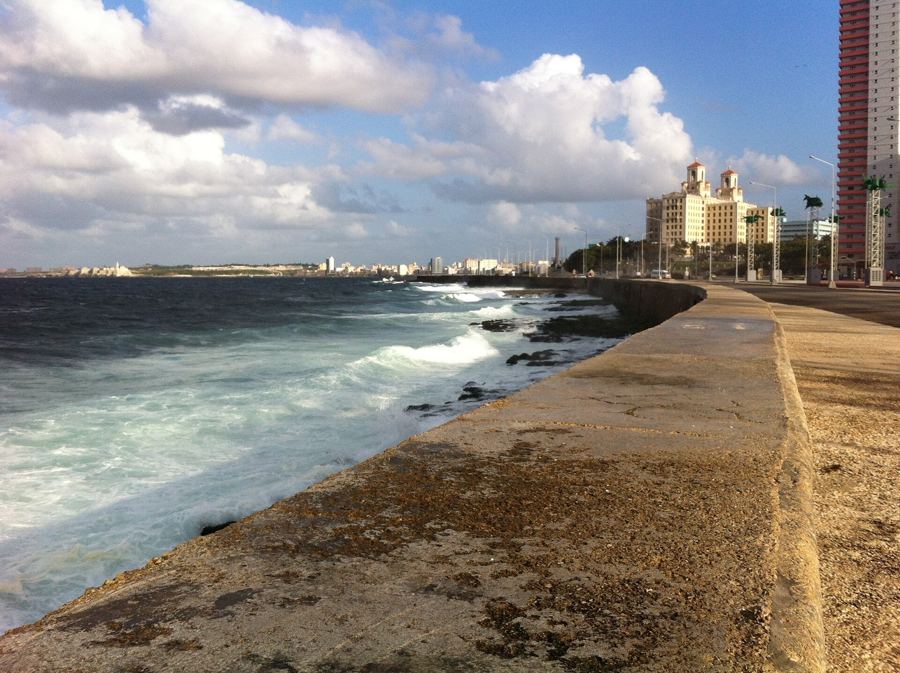 Flip it overThe Malecón at duskPhoto: PLBechly, CC BY-SA 4.0
The Maqueta de La Habana
In a building near the sea in Miramar is the Maqueta de La Habana, a vast scale model of the city. It fills a large hall, and you look down on it from a raised walkway, seeing every street, block and plaza of the old centre and the districts around it in miniature, with buildings colour-coded by age. It was made as a planning tool for the city, and it is a remarkably good way to understand how Habana Vieja, Centro, Vedado and Miramar fit together.
Seen from above, the city's layers become obvious: the tight, irregular lanes of the colonial core, the long straight blocks of Centro, the open grid of Vedado and the spacious avenues of Miramar, each a different century's idea of how people should live. Spend a few minutes picking out places you have already walked: the four old plazas, the curve of the Malecón, the fortresses at the harbour mouth. Opening days and hours change, and it may close for maintenance, so check before you go.
Sea pools on the shore
Miramar's coast is not sandy. The shoreline is rough, dark coral rock, and along First Avenue, closest to the sea, you will find small public swimming spots where pools have been cut or walled into the rock, filled and refreshed by the waves. On hot weekends they fill with families, and the sound is of children shrieking as a bigger wave breaks over the wall.
The rock is sharp and slippery, so wear something on your feet, watch the swell, and do not swim when the sea is rough; in winter, northerly fronts can send waves crashing over the shore. If you want sand, the Playas del Este east of the city are the place for it.
How to visit
Miramar is spread out, and walking it end to end is not realistic. A practical plan is to take a taxi or bus through the tunnel to the start of Quinta Avenida, walk a stretch of the central promenade, cut down to the sea at the Maqueta, and look at the rock pools along First Avenue. Shared taxis run along Quinta and Línea; the routes and fares change, so ask locally.
- Best time: morning, before the heat, when the avenue is at its quietest.
- Bring: water and sun protection, as there are few places to buy things along the way.
- Combine with: Vedado, by walking back across the river along Calle 7 or Línea in the late afternoon.
After the crowds of the old city, Miramar can feel almost empty. That is the point. Sit on a bench in the middle of Quinta Avenida, listen to the parrots in the trees and the traffic passing gently on either side, and the city seems to slow down around you.